
Where’s the Info?
Let’s start with the obvious: there’s not much on the internet about the Hiwatt Hi-Gain 50. Compared to the endless coverage of Hiwatt’s classic DR series, or even other British amps like Marshalls and Oranges, this amp exists in a kind of digital black hole. You’ll find the occasional dusty forum thread, an old review from Guitar Player magazine, and scattered mentions from owners saying, “Hey, this thing rips.” But no deep dives, a couple of demos, and very few firsthand accounts. That makes the Hi-Gain 50 feel like a bit of a secret weapon.
A Little Hiwatt History
Before getting into the amp itself, it’s worth knowing where Hiwatt came from, because it matters for understanding what the Hi-Gain 50 is trying to be.
Hiwatt was founded in the mid-1960s by Dave Reeves, a British engineer who had apprenticed at Marconi Electronics and Mullard before starting to build his own amps in a small first-floor shop above a music store on Crown Passage in Morden, London. After being made redundant from Mullard in 1966, Reeves founded Hylight Electronics and began building amps under his own Hiwatt name. To help finance the early days, he contracted with Ivor Arbiter to manufacture Sound City-branded amplifiers. These were entirely Reeves’ own designs, re-badged with the Sound City name, a fact that would later be proven in court. When Arbiter sued Reeves, alleging that he had stolen Sound City’s design, Reeves challenged Arbiter’s engineers to explain certain elements of the amp circuit. They couldn’t. The case was thrown out. The design had always been Reeves’ alone.
What Made Hiwatt Different?
What made Hiwatt different was Reeves’ obsession with build quality. Military-spec chassis, point-to-point wiring, Partridge transformers. These weren’t boutique affectations; they were engineering choices that gave Hiwatt amps a reputation for being virtually indestructible and nearly free of noise. The result was an amplifier with enormous headroom, tight low end, and a clean, hi-fi character that was unlike anything Marshall or Vox were making at the time.
The DR in the DR series stands for Dave Reeves himself. Pink Floyd, The Who, and The Rolling Stones all played through them. David Gilmour ran his DR103 heads through WEM Super Starfinder cabinets loaded with Fane Crescendo speakers, a combination that Phil Taylor confirmed in a 1995 Guitarist Magazine interview and that gilmourish.com has documented exhaustively. It defined one of the most recognizable guitar tones in rock history. Reeves died in 1981 after an accidental fall. The company changed hands multiple times over the following decades, through the Biacrown era, the Sterling era, and several subsequent ownership changes, with varying results in quality. By the early 2000s, Music Ground had revived the brand and returned it to hand-wired production, which is when the Hi-Gain series was introduced.
What Is the Hiwatt Hi-Gain 50?
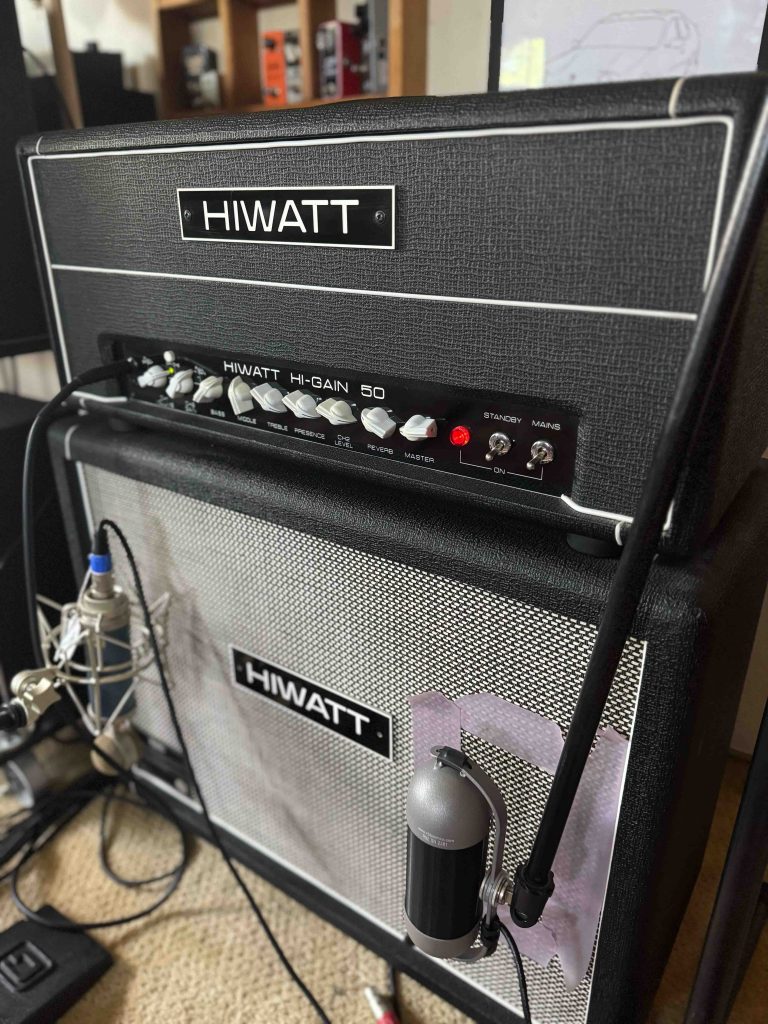
The Hi-Gain 50 was part of Hiwatt’s modern lineup, introduced in the mid-2000s. My head is dated 2006. The idea was straightforward: give players the classic DR-series clean tone they loved, but add a proper high-gain channel for players who wanted more aggression than any DR ever offered stock. Did they accomplish it? Eh…. Maybe… Sort of…
Channel 1 is supposedly built from the DR-series circuit. It’s bright and clean. The kind of clean that doesn’t flinch when you dig in. There’s a push-pull bright switch that adds shimmer and sparkle on top of an already articulate midrange. It’s a good pedal platform, and it earns that, but the Hi-Gain 50 is darker and maybe warmer. It’s not the classic Hi-Watt Sound
Channel 2 is a different animal. Three cascading gain stages before the EQ give it genuine crunch and drive. Not Mesa-style scooped metal, but thick British grit. With the high-gain pull switch engaged and the EQ dialed right, you can get well into sludge and doom territory.
The specs: 50 watts, 2x EL34 power tubes, 4x ECC83/12AX7 preamp tubes, Accutronics spring reverb, an FX loop, and foot switchable channels.nto sludge/stoner/doom tones. And that’s where the cab pairing makes all the difference.
Mine: A Head and a 2×12 Fane Cabinet
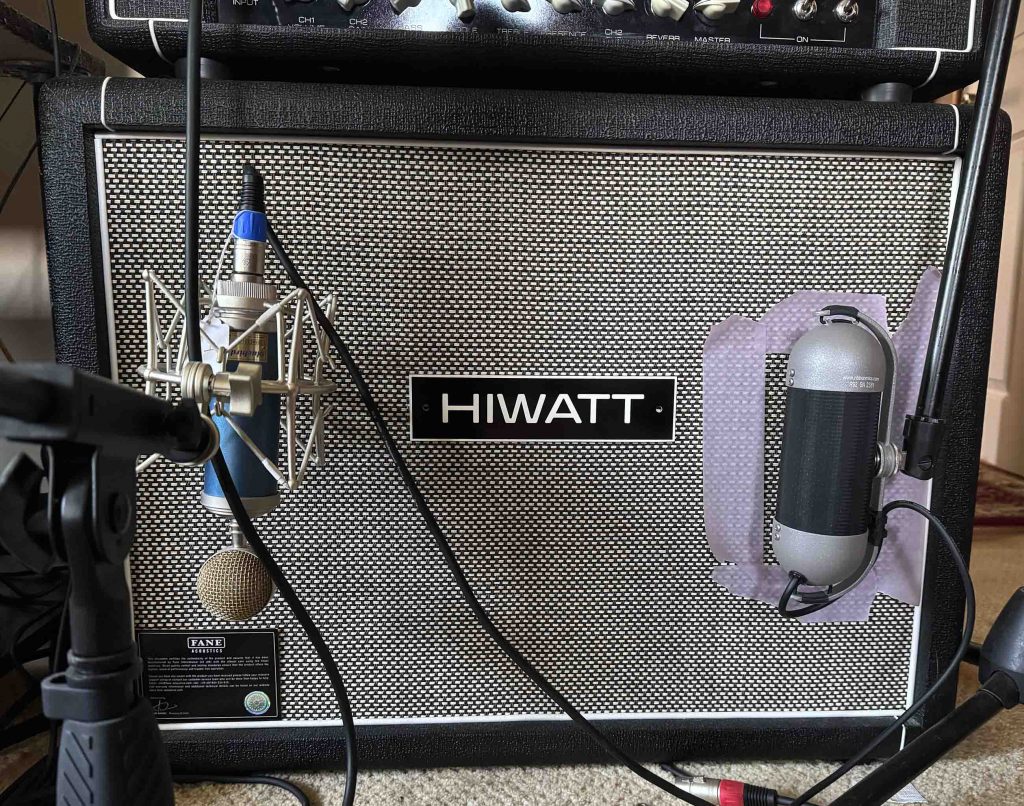
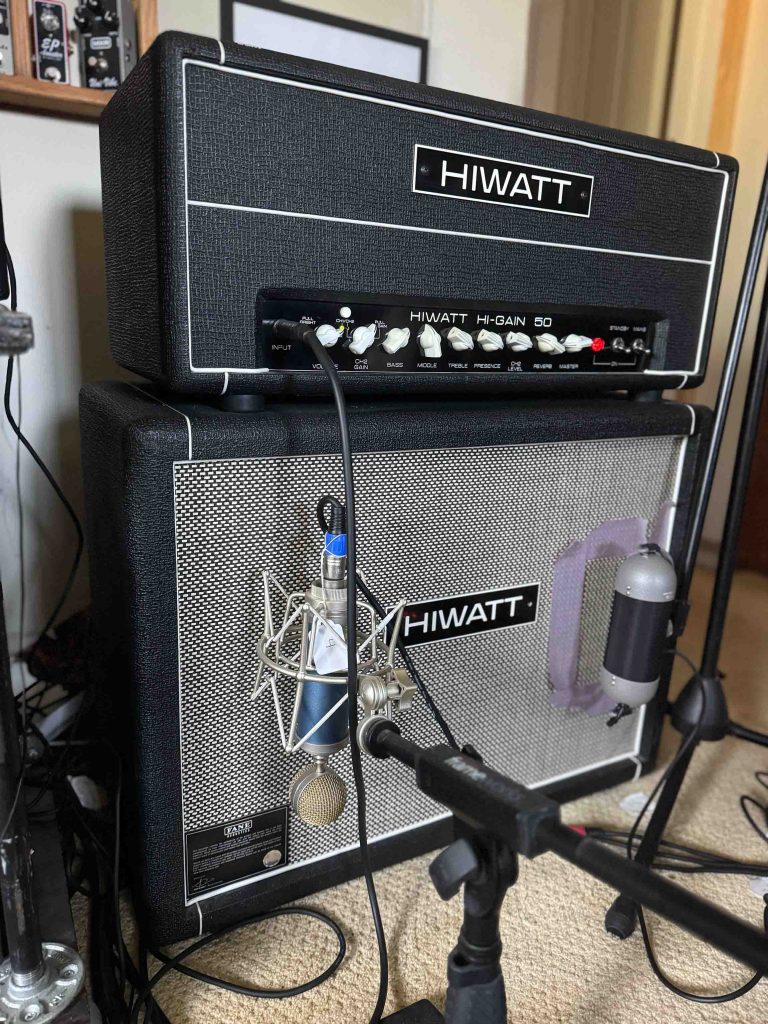
I picked up my Hi-Gain 50 head on Reverb, and it came paired with a separate Hiwatt 2×12 cabinet loaded with Fane F75 speakers at 16 ohm. Whether the previous owner paired them intentionally or just sold them together, I can’t say for certain, but it’s a combination that works.
The Fane connection to Hiwatt isn’t incidental. Fane speakers were standard in original Hiwatt cabinets during the Dave Reeves era. They’re part of the sound. The F75s in my cabinet have that tight, punchy character: prominent upper mids, controlled low end, and a projection that fills a room without getting flabby. They sit tonally somewhere between a Greenback and something harder-edged, and they take the amp’s DR-style clean tone and make it feel full even at home studio volumes.
Honest Impressions
The Hi-Gain 50 is a slightly dark amp. Maybe warm is a better term. If you’re expecting the glassy, cutting brightness of a vintage DR103, this isn’t quite that. The modern Hi-Gain circuit voices things a little warmer. For a Gilmour fan like me who wanted that DR DNA but couldn’t afford an actual DR head, this gets you into the neighborhood. Still, the clean channel is genuinely great. Touch-sensitive, responds to your guitar’s volume knob, and takes pedals beautifully.
But I should be honest about its limitations.
There’s a notable delay when switching between channels. For live use where you need to flip from clean to dirty mid-song, that lag is a real problem. In practice, I rely entirely on pedals for gain staging. The amp stays on one channel and the pedals do the switching work. If you’re a one-channel player, this is a non-issue. For live use, it’s a limitation worth knowing about.
The other bummer: mine didn’t come with its footswitch. That means I can’t remotely toggle the effects loop, reverb, or the bright/high-gain channels. Everything has to be done manually on the front panel. It’s manageable in a home studio setting, but something to factor in if you’re hunting for one.
Who Is This Amp For?
The band I played in over the years drew from a wide pool. My Morning Jacket, Pink Floyd, Coldplay, Pearl Jam, Oasis, and indie rock like Built to Spill and Pete Yorn all left a mark. We were rust belt rock in the broadest sense. Big on atmosphere, rooted in melody, and loud enough to mean it. The Hi-Gain 50 fit that world well. It’s a British amp that rewards players who lead with dynamics rather than distortion, and it’s loud enough for a full band rehearsal or a proper stage without needing to push it past comfortable.
Today I write music mostly solo, and I still find it hard to put a label on what I make. There are hooks. There are parts people can sing along to. But I like to make things strange, layering sounds and textures, field recordings, reverb-soaked guitars, stacked vocal takes that blur into something almost choral. It sits somewhere between psychedelic and pop, and I’ve stopped trying to resolve that tension. The music lives in that space between accessibility and disorientation, and I think that’s where it belongs.
The Hi-Gain 50 serves that approach well. Channel 1 as a clean platform for pedals and atmosphere, the master volume keeping things controlled for late-night recording. It’s an amp that stays out of the way when you need it to and asserts itself when you push it.
One thing this amp has taught me: I’ve come around to appreciating newer gear. As I’ve collected older vintage pieces over the years, I’ve started to realize the refinements made over decades of amp development genuinely matter. Newer doesn’t always mean worse. Sometimes it means better engineering, better reliability, better usability. The Hi-Gain 50 is a good example of that. It’s not a vintage classic, but it’s a solid modern amp with real heritage in its DNA. Players who want a single amp that can do David Gilmour cleans and Electric Wizard riffs, this oddball Hiwatt delivers.
A Sleeper Worth Knowing About
The Hiwatt Hi-Gain 50 isn’t a DR, it isn’t famous either, and it probably never will be. But for a player who wants genuine DR-series clean tone, a credible British gain channel, and Fane speakers without spending vintage DR103 money, it’s worth knowing exists. It’s obscure, it has quirks, and mine came without its footswitch. But it has a Hiwatt vibe where it counts, and that’s enough.