
You know the feeling. You finally get some time in the studio. Things are settled, the work emails can wait, and you sit down to finish that song. Thirty minutes later your ears are ringing, the vocals won’t sit, the drums sound like they’re coming through a wet blanket, and everything you’ve done feels flat.
So you shut it down for the night and figure maybe you’ve lost it.
That was me for the last few months. It turns out I didn’t have a mixing problem. I had an ear problem, and it was sitting on my desk.
Twenty Years of Lies I Could Trust
For more than twenty years I mixed on a pair of KRK Rokit 5s. First generation, bought used. Nobody would call them accurate. They were colored, they hyped things, and I knew it.
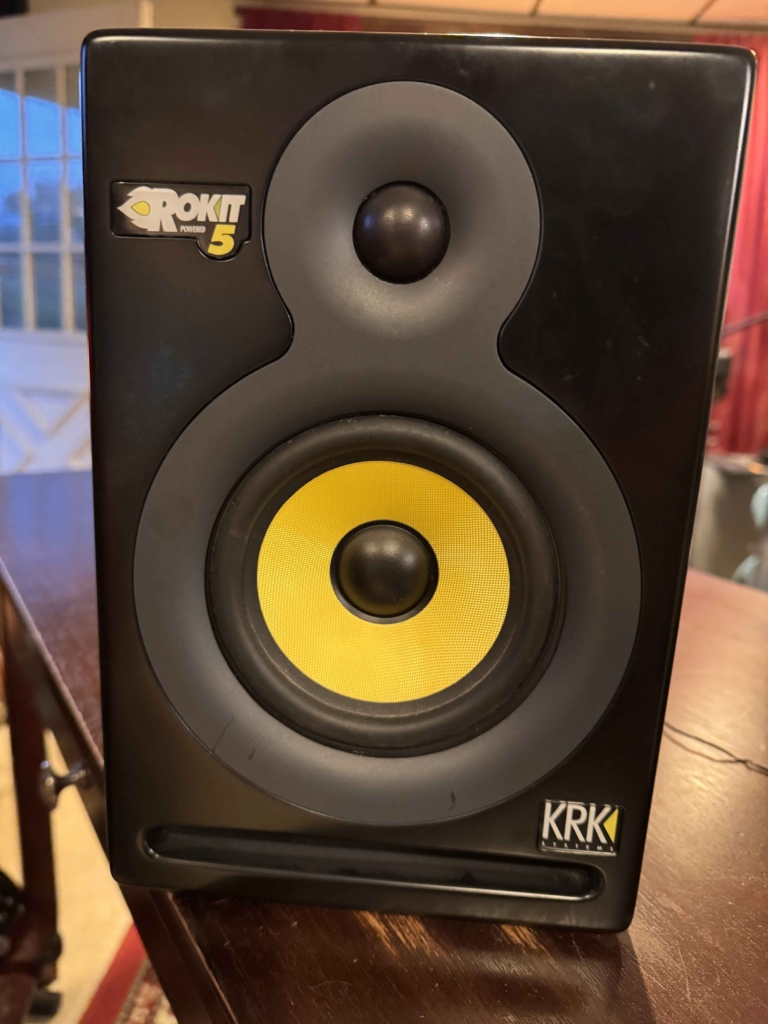
But I knew exactly how they were wrong. I knew where they lied and where they told the truth. If the low end sounded a certain way on the KRKs, I knew how it would land in the car. That kind of knowledge doesn’t come from a spec sheet. It comes from years of mixing, checking, failing, and adjusting.
Then they died. Twenty years is a good run for any piece of gear, especially one that came to me secondhand.
The Upgrade That Wore Me Out
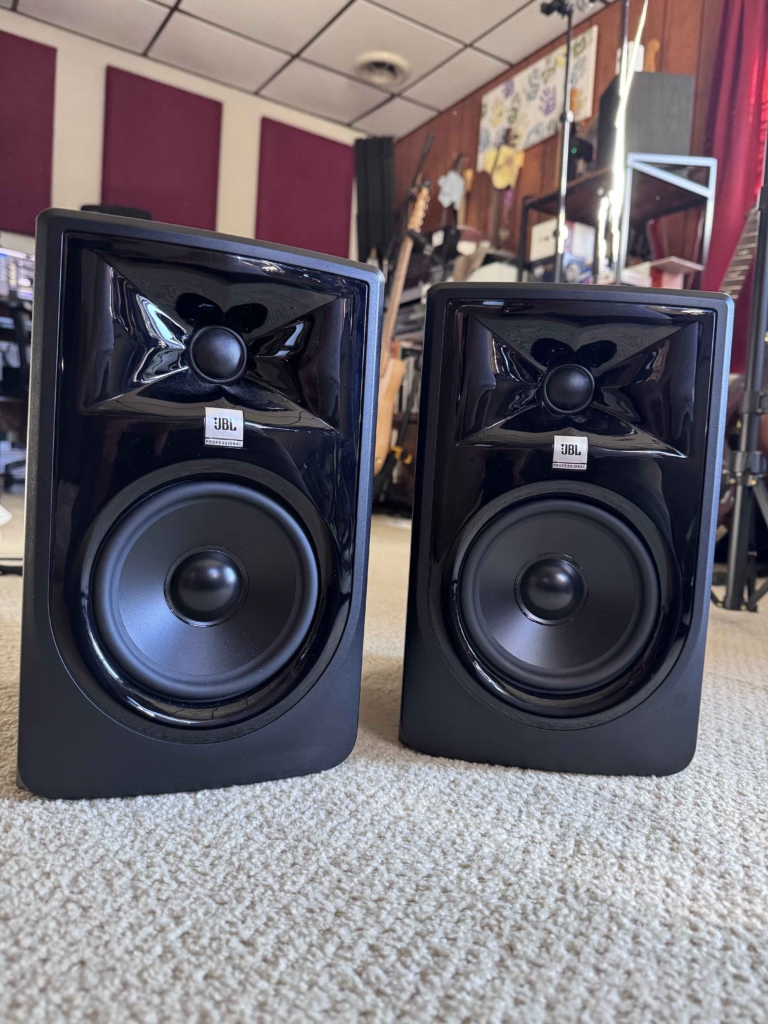
I replaced them with a pair of JBL 305P MkIIs. On paper it was a smart move. They’re popular, they’re well reviewed, and plenty of people make great records on them.
From the first session, my ears didn’t agree. The highs were just too much. It felt like they rang in my head, and no matter what I did, I couldn’t get rid of the harshness. Vocals never sat right in the mix. Drums turned to mud. Honestly, everything just sounded meh. Bland. A muck of mush in the mids.
The worst part is that I blamed myself first. When you’ve been doing something for decades and suddenly nothing sounds right, you don’t think it’s the speakers. You think it’s you.
What Ear Fatigue Actually Is
Ear fatigue is what happens when your ears get worn down from listening, especially to harsh upper mids and highs. It’s not hearing damage, but it’s real, and it changes how you hear.
Once your ears are tired, you start making bad calls. You push the top end to get clarity back. It then buries the vocal because it suddenly sounds piercing. You stop trusting your decisions, and every pass feels worse than the last.
A speaker that fits you lets you work for hours. A speaker that doesn’t can wear you out in minutes, and you might not even realize it’s happening.
Enter the ADAM A7Vs
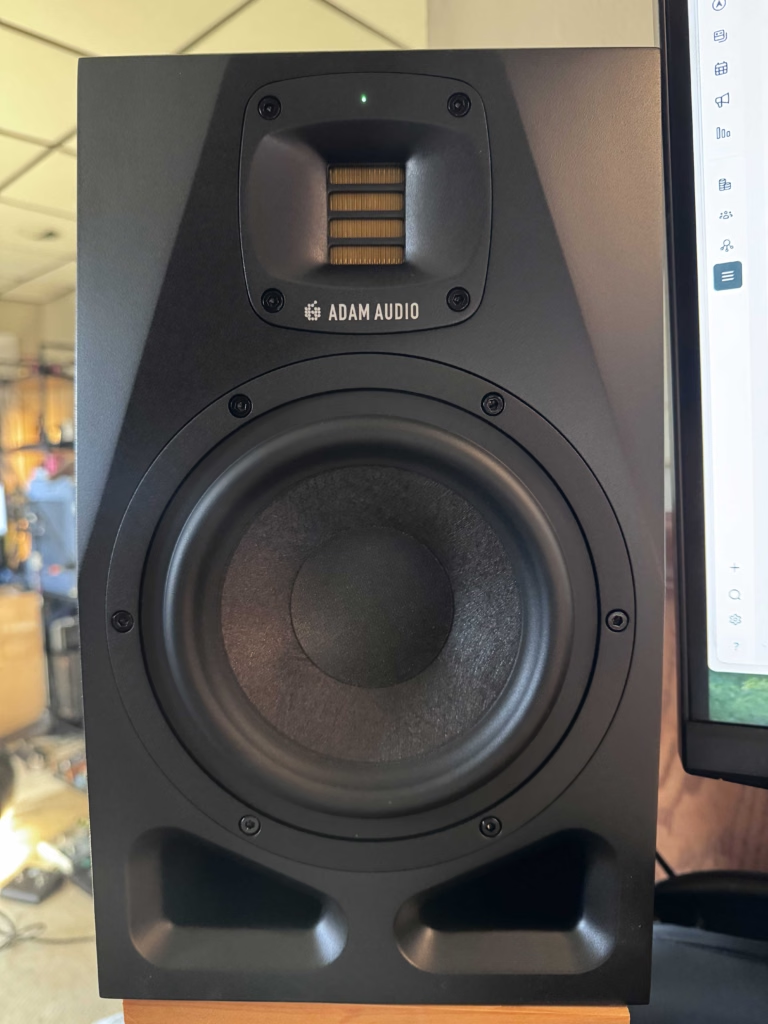
I finally picked up a pair of ADAM A7Vs, and the difference was instant. Not just in how they sounded, but in how my ears reacted. The highs were clear without biting. I could actually sit and listen.
I didn’t just plug them in and go, though. The A7Vs have room adaptation switches on the back for Bass, Desk, Presence, and Treble. Those exist because where a speaker sits changes how it sounds. Push a speaker close to a wall and the bass builds up. Set it on a desk and reflections off the surface can cloud the low mids.
So I started with a tape measure. The backs of both speakers sit about six inches off the wall, close enough that the wall adds real low end, so I set Bass down 2 dB. They also sit behind a deep desk, so Desk went down 2 dB as well. The stands lift them a bit, so I didn’t need to cut it further. I also made sure each tweeter was the same distance from my head. If one speaker sits closer, the whole stereo image pulls to that side.
I started with Presence and Treble flat. Then the snare on Billie Jean started wearing on me. That crack lives in the upper mids, which is what the Presence switch controls, so I dropped Presence 1 dB and left Treble alone. The snare kept its snap and stopped stabbing. Final settings on both speakers: Bass down 2, Desk down 2, Presence down 1, Treble flat, Pure voicing, level at 0 dB.
Then I let two records do the rest.
Billie Jean, in mono. Engineers have used this Michael Jackson track as a reference for decades because Bruce Swedien’s mix is so clean. The kick, the bass line, and the vocal are tight, dry, and dead center. In mono, all of it should come from one point exactly between the speakers. If the vocal leans to one side or the bass blooms more on the left than the right, something is off: placement, distance, angle, or level. Once Michael was locked in the middle and the kick and bass were punchy without booming, I knew the foundation was right.
Kind of Blue, in stereo. Then I switched to stereo and put on Miles Davis. Kind of Blue was recorded in 1959 with the band playing together in the room and very little processing. Real instruments, natural dynamics, and a wide stereo picture. It tells me two things. First, whether I can hear where each player is sitting. Second, whether the cymbals and horns sound smooth or harsh. After the JBLs, that second test mattered more than anything.
They are absolutely fantastic.
The Question I Can’t Shake
To get used to the new speakers, I pulled up some old mixes and started remixing them. I’m already liking what I’m creating so much more.
And that got me thinking.
Since I started the Down on Jane social channels, I haven’t been writing and recording nearly as much. I’ve blamed it on time. Filming, editing, posting, answering comments. I wrote about that cycle in “Feeding the Machine,” and it’s all true.
But I have to wonder how much of it was the JBLs. When every session ends with ringing ears and a mix that sounds like mush, you stop looking forward to sitting down. Not all at once. Just a little less each time, until one day you realize you haven’t recorded anything new in weeks.
I can’t prove it. But I know how I feel walking into the studio now, and it’s different.
Trust Your Ears
This isn’t a post about JBL being bad. Lots of people love those speakers, and in another room or for another set of ears, they might be perfect. They just weren’t right for me.
The real lesson is simpler. If something in your setup feels wrong, trust that. If you dread sitting down to work, ask why. Sometimes the thing standing between you and your creativity isn’t time, or talent, or age. Sometimes it’s a piece of gear quietly wearing you down.
Your ears are the one piece of gear you can’t replace. Take care of them.
As for the JBLs, they’re going up on Reverb. Maybe they’ll be the perfect fit for someone else’s room and someone else’s ears.
If you haven’t subscribed to the blog yet, or if you want to grab your free copy of the the home studio checklist here.