
Published by Rob Hoffman – Down on Jane
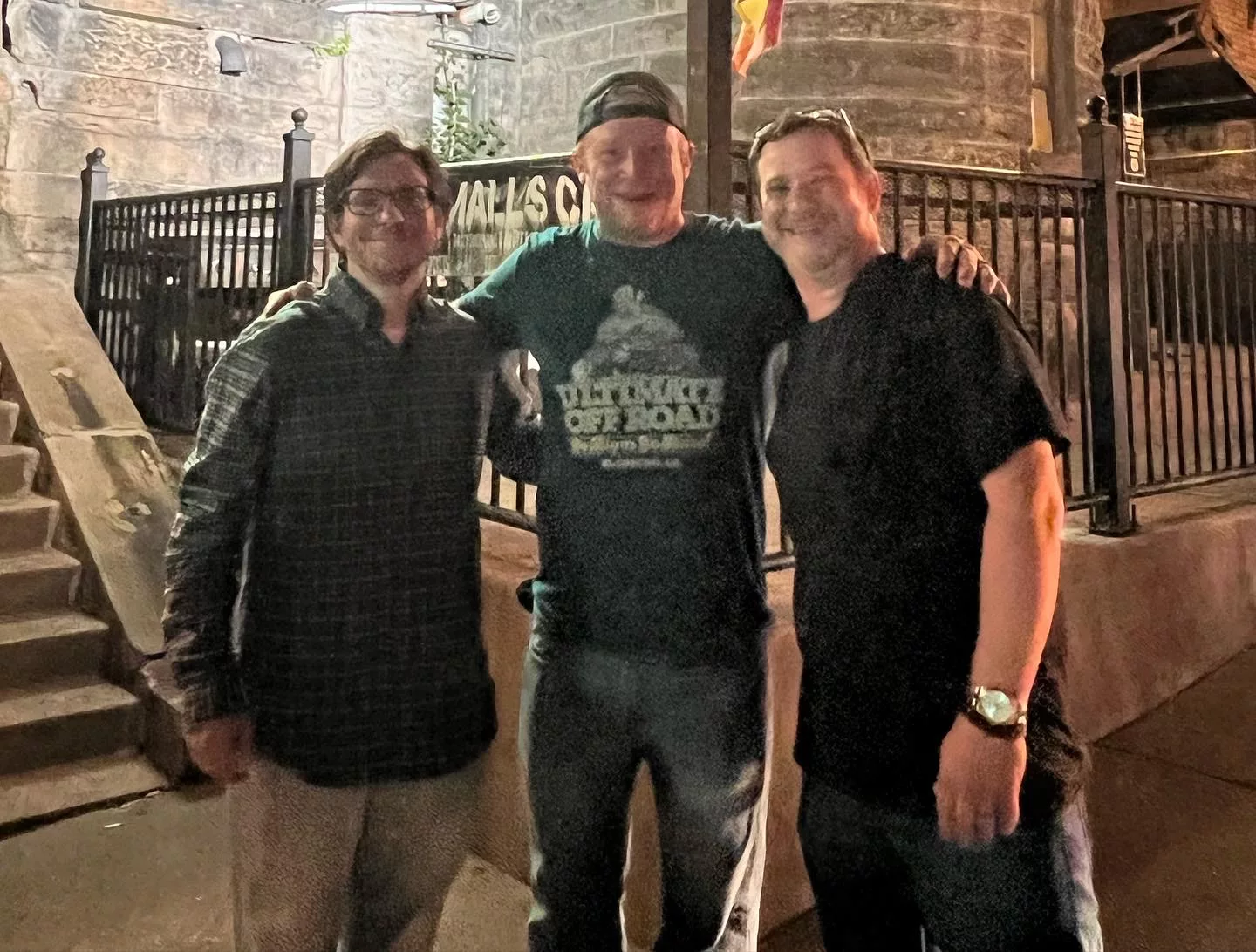
Last Saturday night I stood in Mr. Smalls Theatre in Millvale with Tom, Scott, their wives, and mine. I’ve been seeing this band live since roughly 1998. I’ve seen them in small clubs, theaters, and rooms I will never forget. I almost didn’t go to the show because I started to tell myself I’ve seen them so many times, what’s going to make this time more special than the last?
The band is the Afghan Whigs. They’ve been at it for 40 years. And if you want to understand anything about Down on Jane, about the way I write, about what I was reaching for when I was a college kid who could barely put a sentence together, you need to understand this band first.

Most people my age and older will tell you they started playing and writing because of the Beatles, or Pink Floyd, or some other classic rock band that lit the fuse. And yeah, that’s true for me too. But that night, watching them play, I realized they were a much greater influence on me, my music, and my writing than I had ever reckoned with. Standing in that room, I started to work it out in real time. Maybe that’s the most Afghan Whigs thing about this whole post. They worked it out on the records. I’m working it out in a blog.
The First Two Songs
I was at Penn State. Working at the college radio station. Someone handed me a CD and said, “Listen to this.”
The record was 1965, the Afghan Whigs’ sixth album, released in October 1998. It opens with a track called “Somethin’ Hot.” It hits you fast, and it hits you with want. It’s the sound of a Friday night in a State College bar when everything is possible, and nothing has gone wrong yet. Dulli’s got her phone number. He’s thinking about taking her for a ride. Cocktails for two, down lover’s lane. The whole song is a pickup, and it knows it, and it doesn’t apologize for it. Flirty. Confident. The kind of song that has what my kids would call rizz. Then it goes directly into track two, “Crazy.” And “Crazy” doesn’t continue the Friday night. It’s the morning after. It’s six months later. It opens with “Whatever did happen to your soul? I heard you sold it to some old boy who lived uptown who could afford it.” That’s not the beginning of something. That’s the middle of something that has already gone sideways. Now he can’t tell if he’s crazy about her or crazy without her, and he doesn’t know which direction is worse. Track one is want. Track two is what want turns into when it sticks around long enough to get complicated. Those two songs in that order are a complete arc. By the time they were done, I was staring at the ceiling of the radio station, wondering what I’d just heard.
My college roommate George put words to it better than anyone before or since. He listened for a few minutes and said, “white boy soul.”
That’s still the best description of this band anyone has ever given me. White boy soul. Think about what that actually means in practice. Dulli grew up worshipping Prince, Otis Redding, Marvin Gaye. He wanted the drama, the sexuality, and the confessional heat of soul music. But he also came up through punk, through the Replacements, through the raw college rock of the late eighties. So what you got was a band that could make you feel like you were in a Memphis recording studio in 1965 and a sweaty punk club in Cincinnati in 1988 at the exact same time. The soul was real. The grit was real. Neither one was a costume. George heard all of that in about three minutes and summed it up in three words.
Then Came Black Love, Gentlemen, Congregation, and the Rest of It
After 1965 I went backwards through the catalog the way you do when a band grabs you by the collar. One album at a time. I wasn’t casual about it. I gave each record the kind of focused attention I was absolutely not giving my actual classes at Penn State. I took apart every guitar riff. I followed every lyric line by line. I was studying these records the way you study a writer whose sentences you want to understand from the inside out.

Black Love (1996) was first and it stopped me cold. Darker than 1965, more cinematic, more overtly noir. It sounds like the score to a film that was never made and probably couldn’t be made. It sounds like midnight in a city you don’t know well enough to feel safe in. Where 1965 had swagger and heat, Black Love had weight and was much darker. The album felt like betrayal, loss, consequence, but then it offers hope in the Whigs’ anthem and closing tune “Faded” with its opening line “You can believe in me, baby.”
“Faded” is still an Afghan Whigs anthem as far as I’m concerned. It’s the kind of song that sounds exactly the same as a kid as it does nearing 50, which is a rare trick. The feeling it produces hasn’t aged one day.
Then Gentlemen (1993). This one didn’t hit me immediately. It took a few listens, which is unusual for me, but I think that’s because it demands something from you. It isn’t an album that lets you sit back and receive it passively. The first time through I knew it was serious. The second time I started to hear what it was actually doing. By the third listen I understood that I wasn’t just hearing a great record. I was hearing somebody’s confession. And the confession is this: he was a shithead. Both of them were unfaithful. Both of them burned it down. But he’s the one who can’t stop circling back to his own guilt, can’t let himself off the hook, can’t point the finger outward even when he’d have every right to. Eleven tracks of a man beating himself up in public, with a full band, in front of anyone willing to listen. Except for “My Curse,” where Dulli steps aside entirely and lets a woman sing what it felt like from the other side. Even in his own confession he knew she deserved her own voice in it. That’s Gentlemen. That’s what makes it unlike anything else.
Then Congregation (1992). Then Up in It (1990). Then Big Top Halloween (1988). I went all the way back to the beginning and then started over again. The earlier records are rawer, less refined, more obviously indebted to the punk and college rock of the late eighties. But even in the early stuff you can hear Dulli searching for something. You can hear the R&B and soul influence starting to surface underneath the noise, like something working its way up through concrete. By the time they got to Congregation they had found it. By Gentlemen they had made it entirely their own.
I was a kid sitting in an apartment at Penn State dissecting the music of a band from Cincinnati, Ohio, trying to figure out how they did what they did. How Dulli could write a lyric that felt both lived-in and literary at the same time. How the band could be this heavy and this soulful in the same breath. How a rock and roll record could feel like reading a novel.
I never figured it out. But I kept trying anyway. I still am.
Tom’s S10. South Street. George.
The first time I saw them was at the Theater of Living Arts in Philadelphia in early 1998. Tom drove. We rode from State College to Philadelphia in his Chevy S10 pickup, manual transmission, and I sat bitch the entire way there and back. It’s a long trip from State College to Philadelphia in an S10, but we did it all in one day because that’s what you do when you’re in college and the band is worth it. You fold yourself into a truck and you go.
George came with us. He was another of our roommates. He also happened to be one of the funniest people I’ve known in my life, the kind of guy who always had the perfect line at exactly the right moment. No setup, no warning. Just the exact right thing said at the exact right time.
It was late winter, early spring. March, maybe. Cold enough that you knew it was cold and you were going to be reminded of it all day. George and I both smoked cigarettes at the time. Somewhere on the way to Philadelphia, George lit a cigarette inside the cab. Tom and I immediately told him to put the window down. George looked at us like we had asked him to do something unreasonable. It’s cold, he said. He wasn’t wrong. Smoking in an S10 with the windows up is brutal. Smoking in an S10 in March with the windows down is also brutal, just in a different direction. George rolled the window down, finished his cigarette, and said nothing else about it. That was George. He would push every boundary available to him and then accept the outcome with complete dignity.
We spent the whole day on South Street before the show. At some point, we ended up in an adult bookstore. George waited about thirty seconds, scanned the room, and then yelled across the entire store: “Tom, they have those extra-wide butt plugs you were looking for over here. Do you want one or two?”
Tom walked out the front door immediately.
Later, standing in line outside the Theatre of Living Arts, George looked down at his ticket and frowned. He said: “Foghat? Why does my ticket say Foghat?”
Tom didn’t think that was funny either.
We saw the Afghan Whigs that night on South Street in Philadelphia and it was everything.
The Crowbar. Greg Dulli on the Stairs.
Sometime around 1998 or 1999, for the second time, Tom and I saw them at the Crowbar in State College. This was the era when Rick McCollum was still in the band and Susan Marshall was singing backup and performing “My Curse” live. If you know the Afghan Whigs you know what that means. If you don’t, scroll back up to the Gentlemen section. I’ll wait. Hearing “My Curse” live in a small room is something I’ve never fully recovered from.
Before the show, Greg Dulli came running up the stairs from the green room to get to the stage. Tom was standing right there and shook Greg’s hand on the way up to the stage.
A few years later, around 2002, Down on Jane played the Crowbar. I remember standing on that stage thinking about that staircase. Same room. Same stage. I got to play where my heroes had played. That’s the only way I know how to say it. One night, you’re a kid standing on the floor watching from the crowd, and then years later, you’re standing on the same stage looking out at the same room. You went from watching to doing. From fan to peer. That stage meant everything because of who we watched on it before we ever got to take it as Down on Jane.
Shortly after that, the band was gone. The Afghan Whigs had stopped performing together in September 1999, and in February 2001, they announced their split, blaming the difficulties of working together with each member living in different states. In further interviews, Dulli clarified that it was an amicable split and didn’t necessarily represent an official breakup. None of that made it feel any better. They were one of the best bands in the world, and they were done.
Dulli didn’t disappear. His main musical project became the Twilight Singers, first formed in 1997 as a side project featuring New Orleans-based musicians, releasing their debut album in 2000. He kept making records, kept writing, kept moving. And then there was the Gutter Twins. Dulli and Mark Lanegan of the Screaming Trees had signed to Sub Pop and released their debut album Saturnalia on March 4, 2008. Pitchfork called them “two of alt-rock’s greatest frontmen,” and Dulli himself nicknamed the pairing the Satanic Everly Brothers. If you’ve never heard Saturnalia and you love the Afghan Whigs, give it a shot. It sounds exactly like what happens when two of the darkest voices in rock music decide to make a record together in the shadows.
The First Reunion. Mr. Smalls. Graying Hair.
The first time I saw the Afghan Whigs after they reunited from the post-1965 breakup was at Mr. Smalls. Sometime in 2022. I didn’t see them when they came through in 2014 for Do to the Beast. I was living my own real life Gentlemen tour at the time, the dissolving of my first marriage.
I wasn’t prepared for what I saw when Greg Dulli and John Curley walked out on that stage. The last time I’d seen them, they were wearing black dress shirts and leather jackets with slick black hair, looking like something out of the Matrix. Sharp. Dangerous. Like they had somewhere to be after the show, and it was nowhere you were invited.
Now they both had full heads of graying hair. It stopped me for a moment. Not in a bad way. Just in a real way. The kind of moment where time becomes visible, and you feel it all at once.
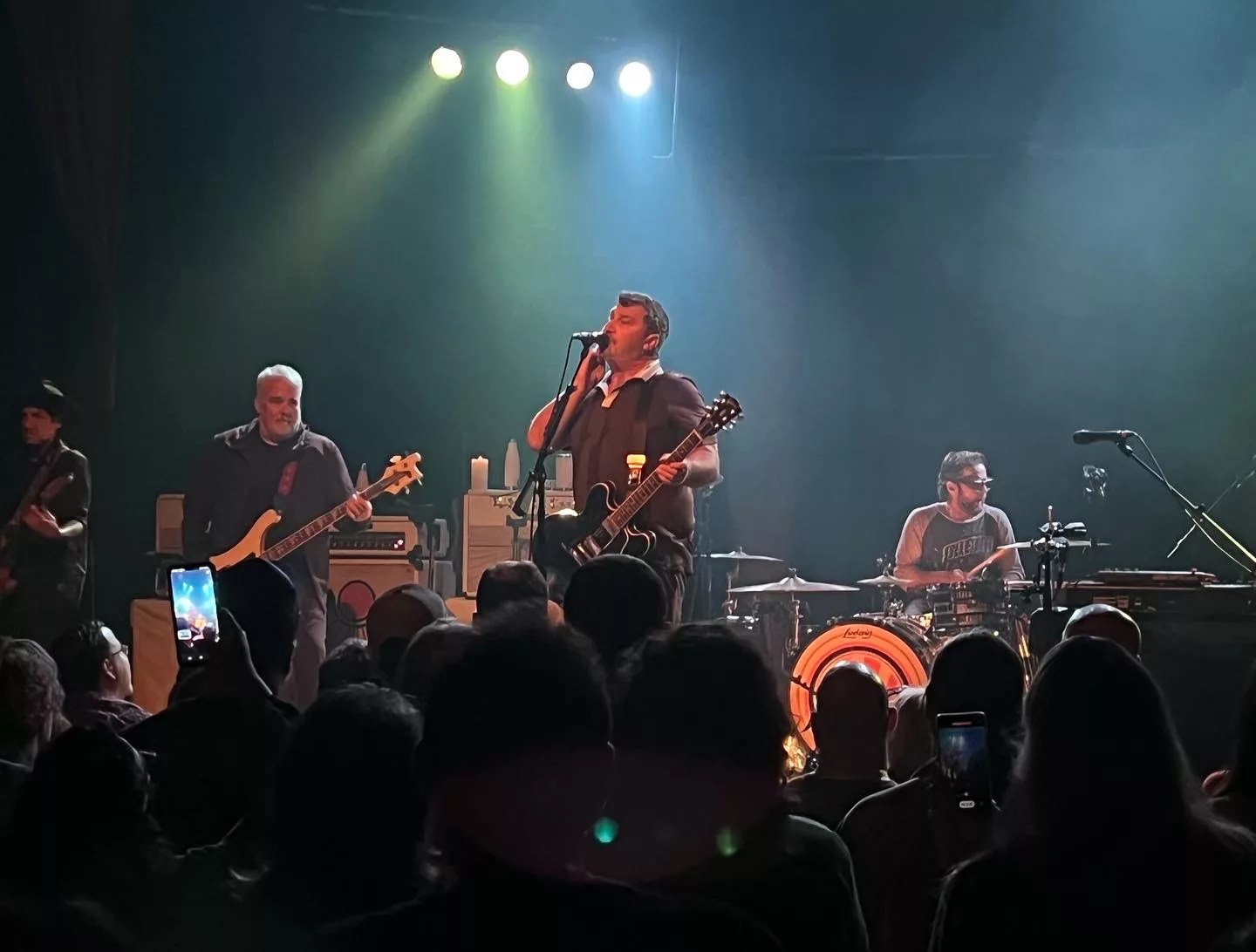
The last time I had been in a room with this band, I was in my twenties, and they were in their early thirties. There was a different kind of energy then. Raw. Urgent. Now there was something else in the room. Maturity. The kind that only comes from earning it. From living through the things that leave marks. I had my own battle scars by 2022, and standing there looking at those two men with their silver hair, I felt all of it at once. The years that had passed. The things that had happened in them. The person I was when I first heard them and the person I have become since. The gray hair wasn’t sad. It was honest. It was a reminder that time doesn’t stand still for any of us, and that the music that meant something to you at 20 means something completely different and somehow even more when you’re nearing 50, and you actually understand what the songs were about all along.
And then they started playing, and none of that mattered at all.
But standing there, I thought about all of us. Greg and John are on that stage. Me in the room. Tom is somewhere nearby. All of us older. All of us carry more years and more weight and more life than we had the last time we were all in the same room together. We were the same people. The same love for the same music. Just at a different point in the story than we had been before. And honestly, how cool is that? That, after all of it — all the years, all the miles, all the things that happened in between — we could still end up back in the same room. They’re on that stage. Us in that crowd. I even got to bring my kids. They got to experience the Afghan Whigs. Passing the torch to the next generation of Whigs fans. Some things are worth appreciating in the moment, and that was one of them.
The Kid Who Tried to Write Like Greg Dulli
What I was working out in Mr. Smalls on this particular Saturday night, listening to the Whigs, was the thing that made this show more special than any of the times before. It was something I’ve never written about on this blog or mentioned to anyone, partially because I didn’t realize how deep it ran. It was the realization that this band is way more personal to me, way more influential, than I had realized or understood.
I’ve loved this band since the first time I heard “Somethin’ Hot” and “Crazy.” That was never the question. But standing in Mr. Smalls on this particular Saturday night, something clicked that hadn’t clicked before. I wasn’t just a fan standing in a room watching a band I loved. I was a songwriter and guitar player standing in a room watching the people who taught me how to try to write.
I never knew that until that night.
When I first heard the Afghan Whigs, I didn’t understand what I was hearing. But I knew it was different from everything else on the radio. Greg Dulli wasn’t writing about girls the way every other rock singer was writing about girls. He was writing about the inside of a difficult relationship. The guilt, the longing, the self-awareness of being the person who caused the damage. It was literary. It was cinematic. It felt like a dark romantic novel being told through a band. And I wanted to do that. I spent my first years trying to write that way. The complicated narrator. The first-person culpability. Dressed up in full-band arrangements with distorted guitars.
The problem was that, as a young college student, I didn’t have the life experience. I didn’t have the craft. I didn’t have the specific damage that produces that kind of writing. And the damage I did have, I didn’t have the distance from it yet to turn it into something. Dulli was 26, 27 years old when he wrote Gentlemen. He had the wreckage and the skill at the same time. I had neither. Down on Jane wasn’t even Down on Jane yet.
Standing in Mr. Smalls on Saturday night, watching Greg Dulli with his silver hair doing exactly what he has always done, I started hearing old songs in my head. Songs I wrote 20 years ago that I hadn’t thought about in years. And I could hear it. I could finally hear where some of that came from. My music doesn’t sound like theirs. It never did, and it was never going to. But the influence is in there, running underneath everything, deeper and quieter than I ever gave it credit for. I’d always pointed to the Beatles, Pink Floyd, the usual list. All of that’s true. But I shortchanged the Afghan Whigs every time I told that story.
It took 30 years of following this band and one night at Mr. Smalls for me to finally hear it clearly.
I’ve never been able to write like Greg Dulli, and I don’t think I ever will. But realizing that he and the Afghan Whigs have been such an important inspiration, even when I didn’t fully understand it, changes something. They pushed me to be better. Every guitar riff. Every dark, complicated lyric. Every record I dissected in that apartment at Penn State. All of it made me a better writer and a better musician than I would have been without them. I’m not the kid who couldn’t form a sentence anymore. I’m not even the same guy who walked into Mr. Smalls that night. But I walked out understanding something about myself and my music that I didn’t walk in with. And at this point in my life, with everything that has come and gone, that’s not nothing. That’s everything.
A Brief History, For the Uninitiated
If you got this far and you still don’t know who the Afghan Whigs are, here is the short version.
They formed in Cincinnati, Ohio, in 1986. Greg Dulli had grown up in Hamilton, Ohio, studied film briefly at the University of Cincinnati, dropped out, moved to Los Angeles to try to become an actor, and then moved back to Cincinnati after being inspired to make music by the California post-punk band the Dream Syndicate. He formed a band called the Black Republicans. John Curley arrived in Cincinnati around the same time to intern as a photographer at the Cincinnati Enquirer. The two met when Dulli knocked on the wrong apartment door asking someone to turn down their stereo. (Source: Encyclopedia.com)
On Halloween night, 1986, Dulli, Curley, guitarist Rick McCollum, and drummer Steve Earle played together in a room for the first time, trick-or-treaters knocking on the door the whole time. That night became the name of their first record. They self-released Big Top Halloween in 1988 on their own Ultrasuede label, pressed only a thousand copies, and one found its way to Jonathan Poneman, co-founder of Sub Pop Records in Seattle. Sub Pop signed them, making them the first non-Pacific Northwest band on the label at a moment when Sub Pop also had Nirvana on its roster. (Sources: Stereogum, Last.fm)
They were never Nirvana. They were never grunge, not really. They were something stranger and more specific: a rock band that listened to Otis Redding and Prince and channeled it through the dark psyche of a frontman working out his damage in real time onstage every night.
Their 1993 album Gentlemen, their major label debut on Elektra Records, is the record critics always point to first. It’s a song cycle about a toxic relationship ending, written on the road during the previous album’s tour. Dulli took conceptual inspiration from Francis Ford Coppola’s 1982 film One from the Heart, using it as a frame to explore, as he put it, how far he could go into the dark psyche of the 1990s male. The album is rooted in a real breakup from his own life. He came home from tour to find his girlfriend had been unfaithful. He had also been unfaithful on the road. The record lives in that specific, uncomfortable place where you’re both the wronged party and the one who deserves it. In a later interview with The Line of Best Fit, Dulli said: “If anyone should be offended by Gentlemen, it is me. I am the shit.” (Sources: Wikipedia, The Line of Best Fit, Albumism)
The track “My Curse” was so personal that Dulli couldn’t sing it himself. He asked Marcy Mays of the Cincinnati band Scrawl to take the lead vocal, saying he felt the woman in the story deserved her own voice in the proceedings. (Source: Spin)
Then a breakup in 2001, a brief reunion in 2006, a full reunion in 2012, and four more albums since, with a tenth currently in progress. The band stopped performing together in September 1999 and circulated a press release in February 2001 citing geographic distance and family obligations as the reasons. Dulli clarified in subsequent interviews that it was amicable and didn’t necessarily represent an official breakup. (Source: Wikipedia) In the years between, Dulli kept making music. His Twilight Singers project had been running since 1997. He also teamed up with Mark Lanegan of the Screaming Trees to form the Gutter Twins, releasing their debut album Saturnalia on Sub Pop on March 4, 2008. Pitchfork described the pair as “two of alt-rock’s greatest frontmen.” (Source: Wikipedia) Lanegan passed away in February 2022 at the age of 57.
Down on Jane