
Where It Started
Before I ever plugged into a tube amp, there was a Fender Ultimate Chorus. It was made around 1991 or 1992, and I picked it up used around 1996 or 1997. At the time it felt like a serious piece of gear.
The cleans were genuinely excellent. A stereo chorus that could make a room feel twice as wide. But the dirt channel was another story entirely. It sounded like a vintage refrigerator about to give up the ghost. There was gain, technically, but nothing about it felt alive or musical. It was the sound of a solid-state amp trying to do something it was never built to do well.
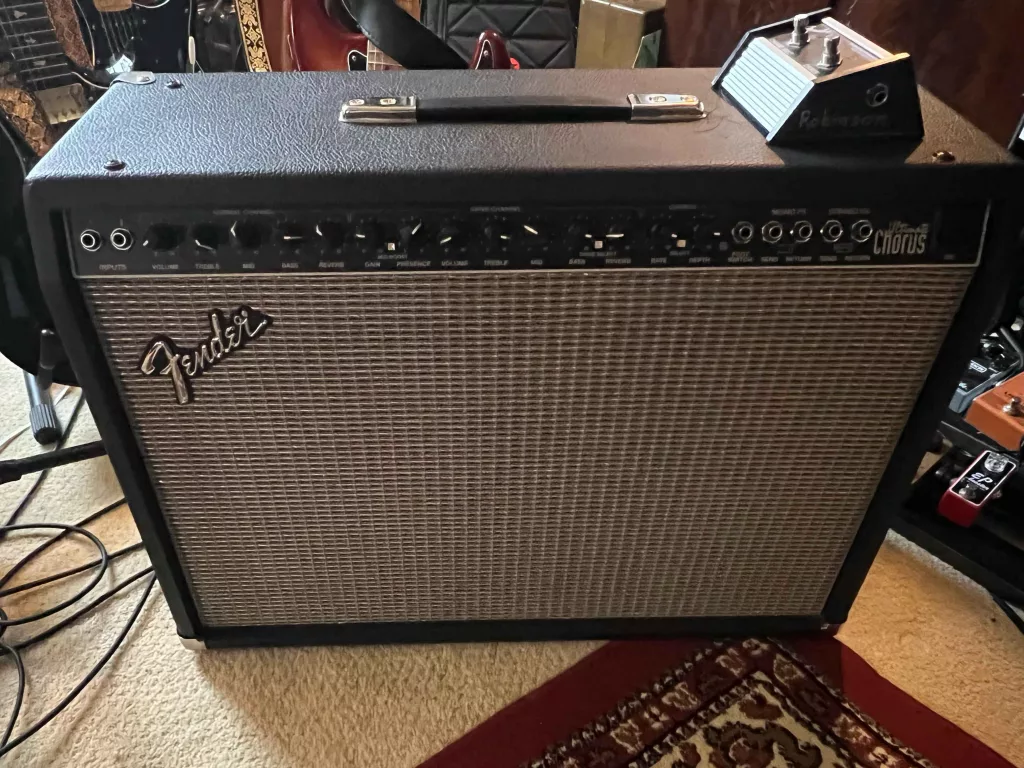
I wanted a tube amp in the worst way.
The Hughes and Kettner Duotone
Saving up took time, but eventually I bought a Hughes and Kettner Duotone combo, somewhere around 2002 or 2003. It became my main amp for Down on Jane.
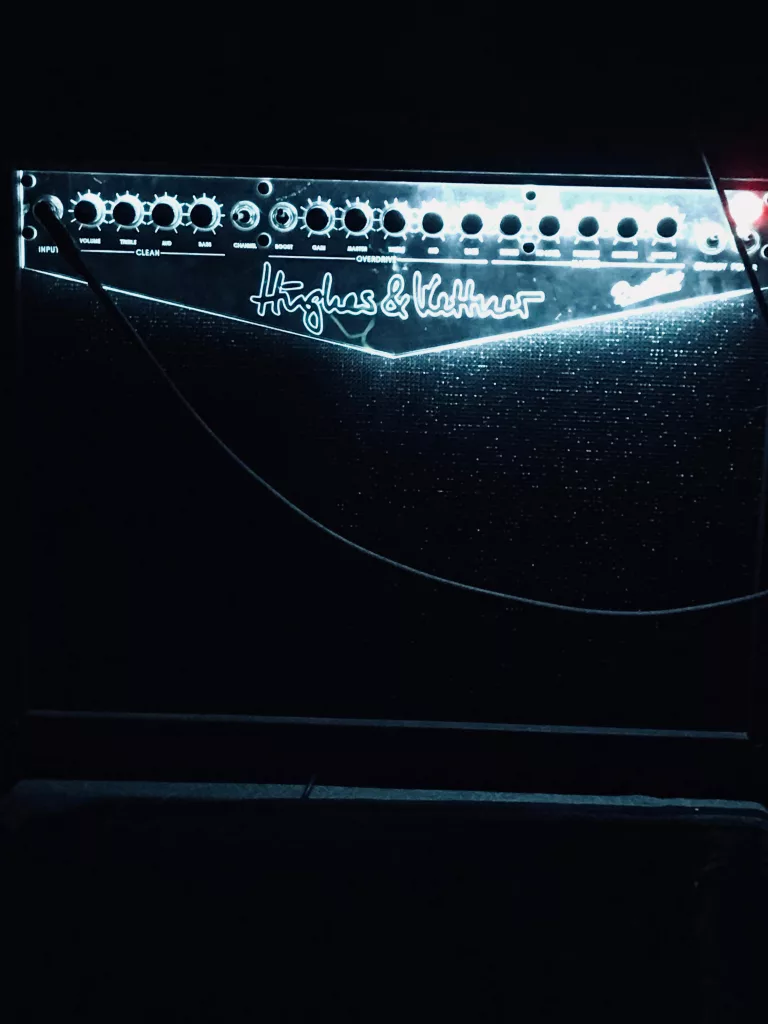
The Duotone was serious. 50 watts, 2x EL34 power tubes, 5x 12AX7 preamp tubes, a single Celestion Vintage 30, and a parallel effects loop. It had two channels, clean and overdrive, plus a boost function that thickened the mids and pushed the gain further. Separate EQs for each channel. Two master volumes so you could set a rhythm level and a solo level and switch between them with the footswitch. German engineering trying very hard to capture a British rock voice and doing a convincing job of it. The clean channel was pristine, almost Fender-like in its clarity, but the overdrive channel was a different beast entirely. At one end, it could breathe and snarl with a sweet, touch-sensitive crunch. Push it further, and it turned into a full-on mental monster. That kind of range in one amp is rare. For a rhythm guitarist, it was nice to know it was there if I needed it.
But the thing that stopped people in their tracks before they heard a note was the lighting. When you switched the amp on, a backlight bathed all fourteen knobs in a cool blue glow. It stood out on any stage. You didn’t need to play a note, and it already had presence.
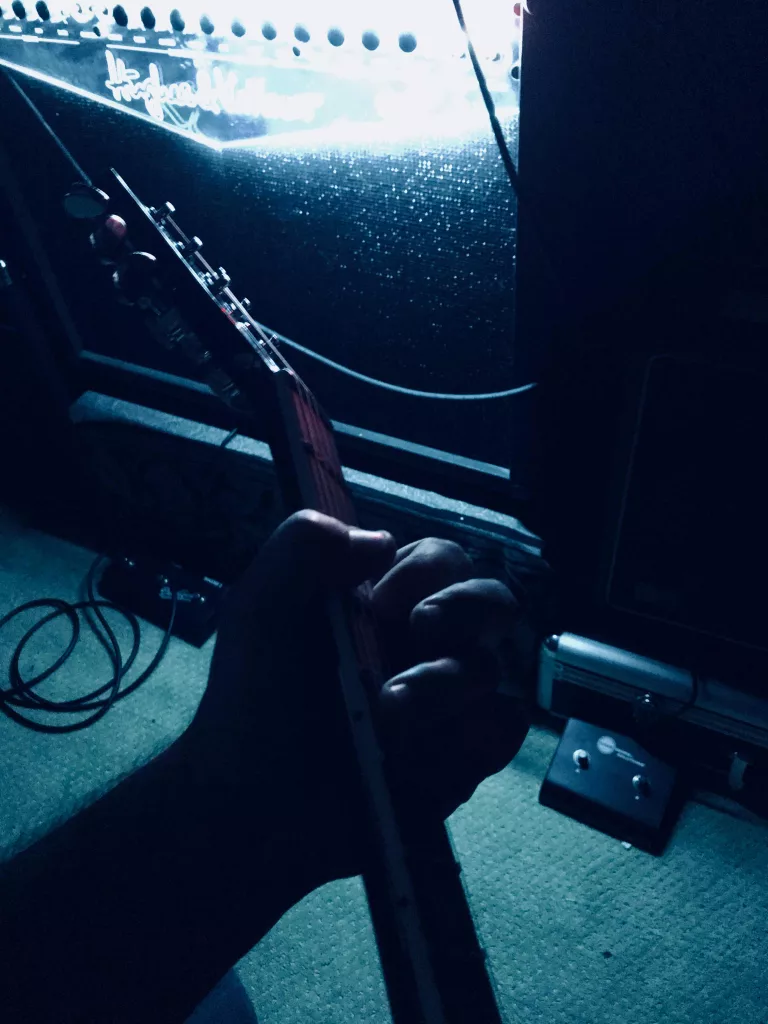
Down on Jane played around Pittsburgh and State College through those years. We opened for My Morning Jacket in 2003. The Duotone was there for all of it, and it held up well. Our sound sat in that rust belt rock space, drawing from Pink Floyd, My Morning Jacket, Pearl Jam, Oasis, Built to Spill, and Pete Yorn. The Duotone’s clean channel was rich and dynamic, and its overdrive had the kind of thick, assertive British character that suited what we were doing. Through that Vintage 30, it had real bite and midrange authority without getting shrill.
The Long Goodbye
By around 2018 the Duotone started to go. It was eating power tubes faster than it should have been, and beyond that it had developed other problems that were making it sound genuinely unpleasant. Frank at Mannella Guitars suggested that the smart move was to send it down the road and let the next owner sort it out.
So I did.
It wasn’t a hard decision. By that point I wasn’t making the same kind of music I was making in the early 2000s. The band had wound down years earlier as everyone moved into the demands of adult life, and for a long stretch, roughly from 2004 onward, making music meant getting together with the old bandmates once a year and running through the Down on Jane catalog. That was something, but it wasn’t creating.
What was filling the space instead was listening. A lot of blues, a lot of jazz, and A LOT of classic rock. And somewhere along the way I started taking guitar lessons, partly to shake off years of bad habits, and partly because something felt like it was starting to boil over. The lessons opened my ears and my eyes to what was possible. After years away from writing, the creativity was ready to come back out.
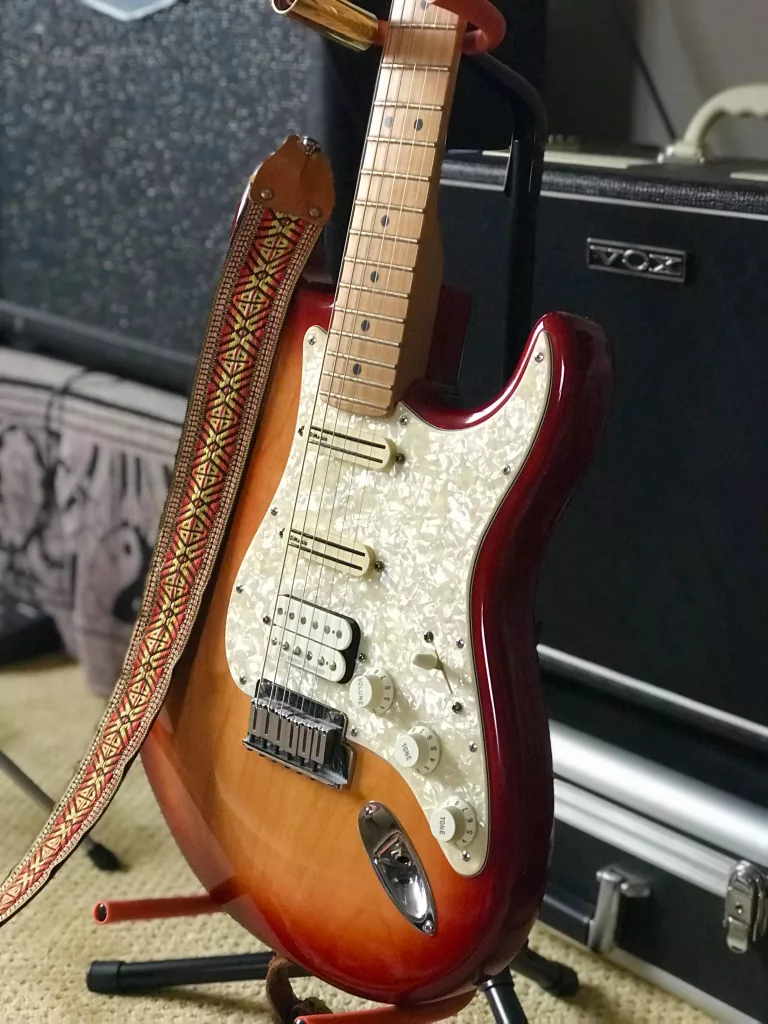
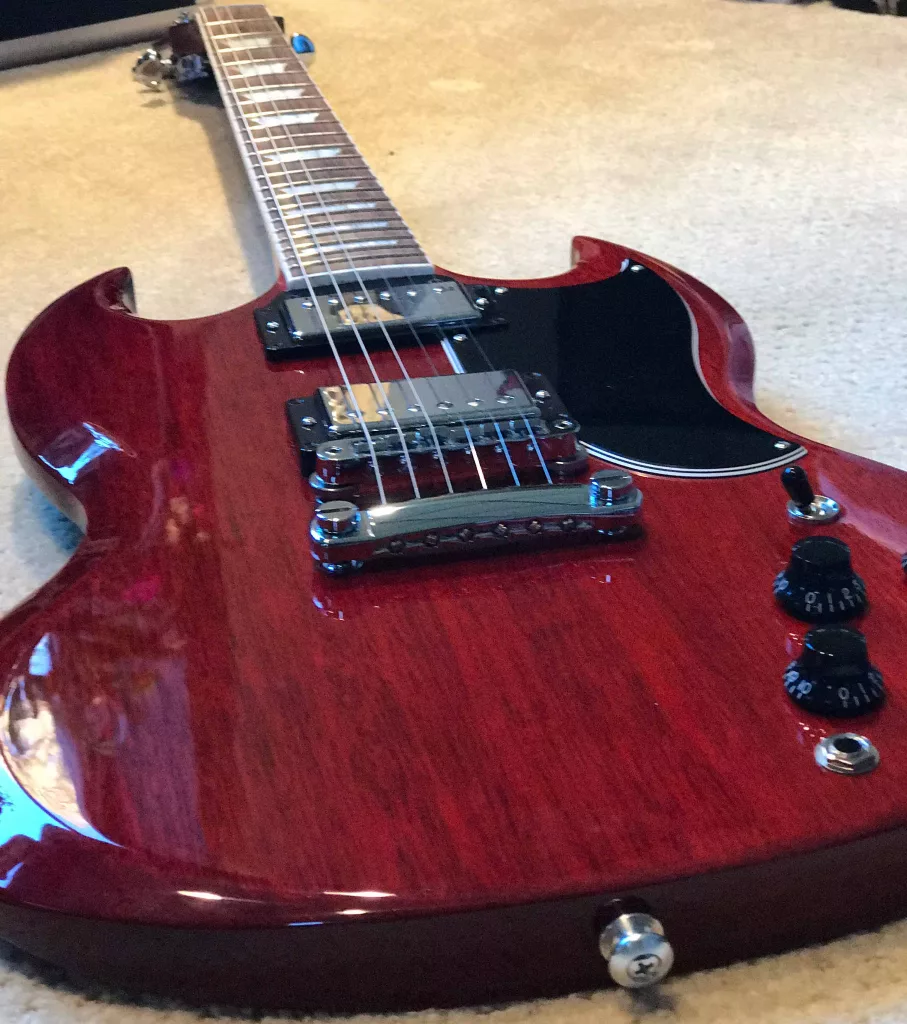
The guitar change was part of the same shift. I’d always loved SGs but could never afford one when I was younger. When I finally could, I made the move to a 2018 Gibson SG Standard and put the Tex Mex Fat Strat aside, though it’s still around in a different iteration. The Duotone going out around the same time didn’t feel like a door opening or closing. It was simpler than that. My musical personality had grown into something new, and the gear needed to grow with it.
The Vox Dead End
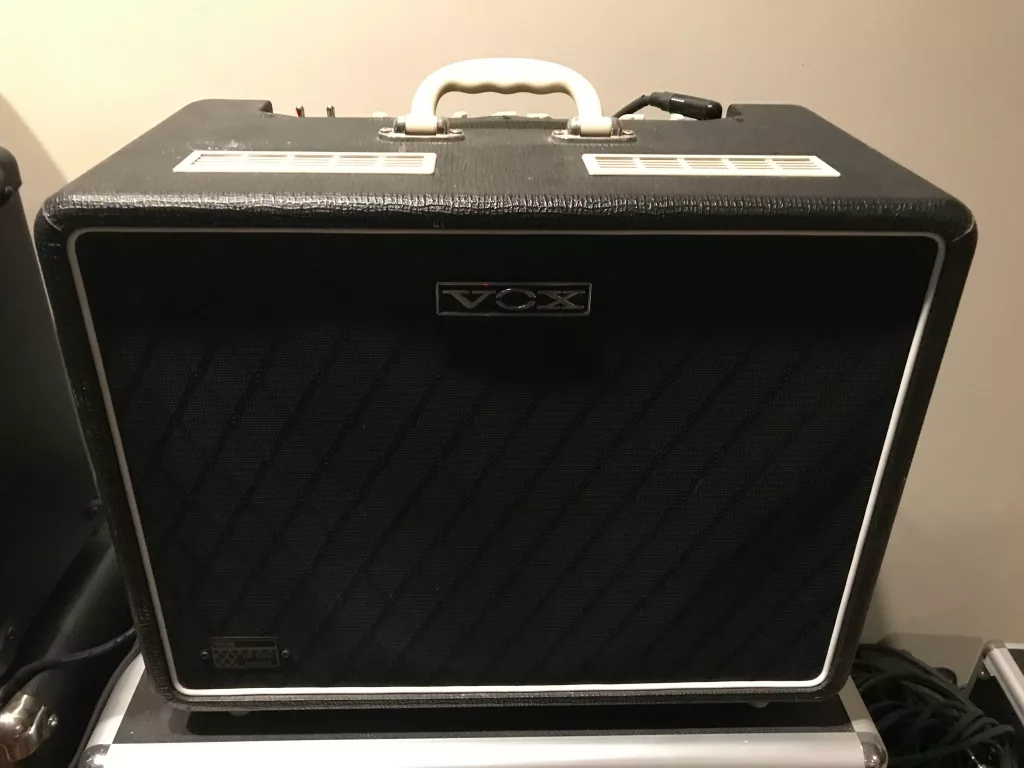
I tried a used Vox Night Train combo with a Greenback next. On paper, it seemed like it could work. In practice, I could never get the right tone out of it. I always needed to use an Xotic Effects EP booster to get the tone right. I even swapped the Greenback and tried several different speakers. The Night Train has a character all its own and it just wasn’t speaking the language I needed. It didn’t stay long.
Enter the Hiwatt
My musical personality had grown into something new, and the gear needed to grow with it. A big part of what I was listening to during that period was David Gilmour, and that was pulling me in a very specific direction tonally. The DR103 was the dream. It’s always the dream. But the cost of a genuine vintage DR head is a different kind of conversation entirely.
There’s an irony worth acknowledging here. Gilmour is one of the greatest Stratocaster players who ever lived, and I was moving away from a Strat at the same time his music was pulling hardest at me. But his influence was never really about the guitar. It was about the approach. Saying more with fewer notes. Bends that breathe. Sustain that carries emotional weight in a way that speed and technique never can. The SG pushed me toward my own sound, but that philosophy of playing is still at the center of everything I do.
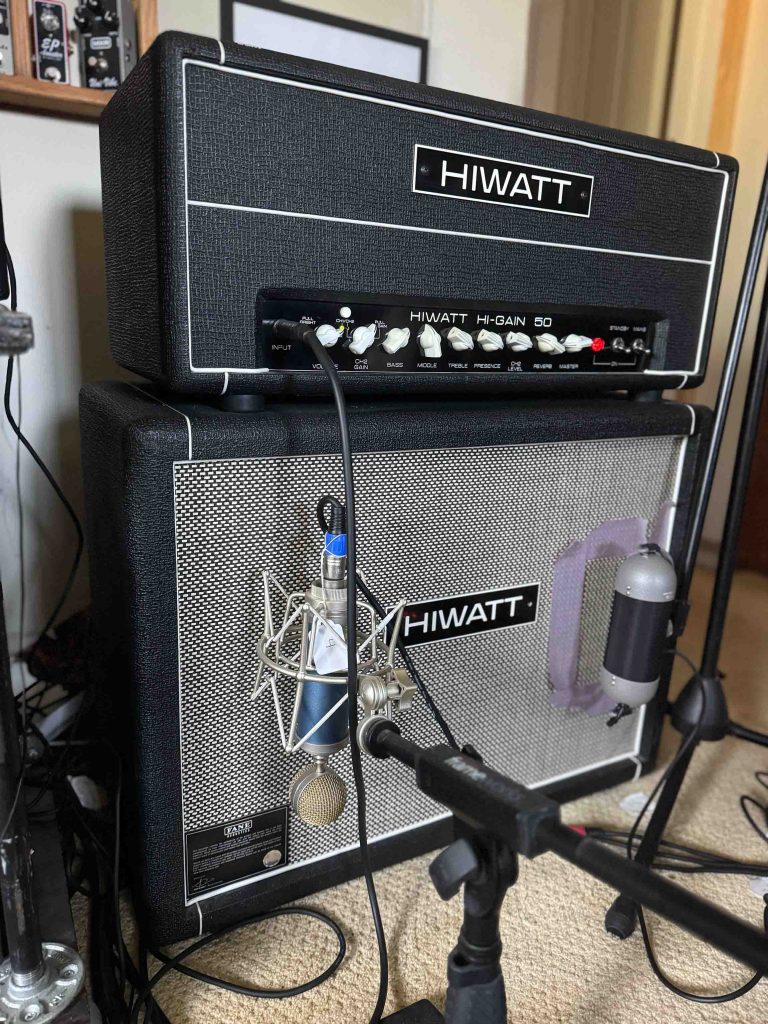
The Hiwatt Hi-Gain 50 came up on Reverb paired with a separate 2×12 cabinet loaded with Fane F75 speakers at 16 ohm, and it fit the budget. The Fane connection to Hiwatt isn’t incidental either. Fane speakers were standard in original Hiwatt cabinets during the Dave Reeves era, so the pairing felt right on paper and turned out to work well in practice.
That amp is where I landed, and where I’ve stayed. It’s a different kind of amp than the Duotone. Warmer, more restrained on the gain side, better suited to the music I’m making now than the music I was making then. Which is probably exactly right.
The full story of the Hi-Gain 50 is in the other post. But the journey to get there started with a used solid-state combo and a dirt channel that sounded like something dying, and that’s not nothing. It took a long time, a real band, a lot of stages, and one excellent German amp with blue lights to get here.