
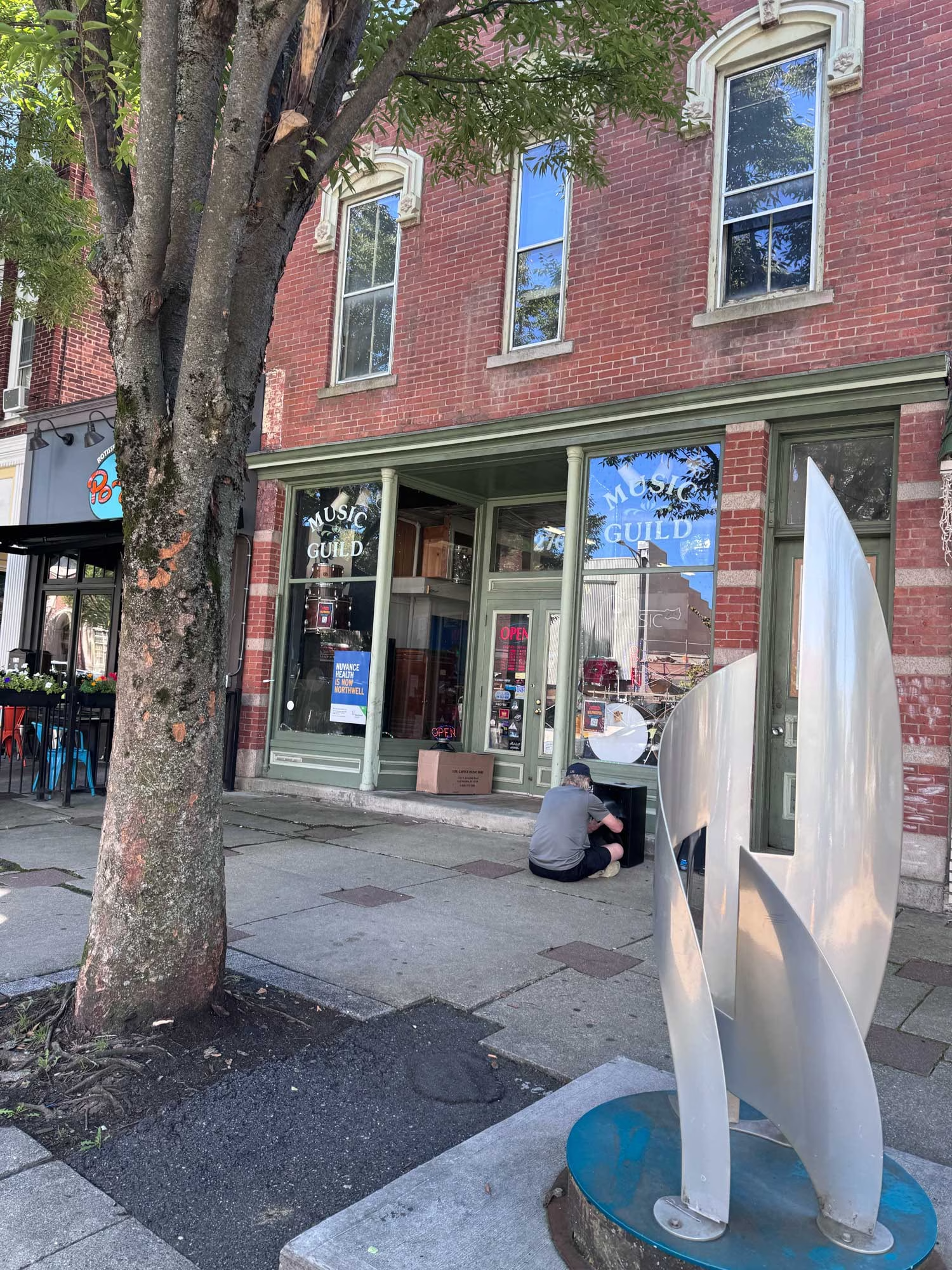
I was in Danbury, Connecticut this week for work. It was one stop on a run through New York, New Jersey and Connecticut, the kind of week where you live out of a rental car, a hotel, and a string of conference room meetings. I have a rule when I travel: if there’s a guitar shop within walking distance of wherever I’m sitting in meetings, I find it. Somewhere between the hotel and the client office, I found The Music Guild on Main Street.
I wasn’t ready for it.
Stepping Into a Vintage Guitar Shop Frozen in Time
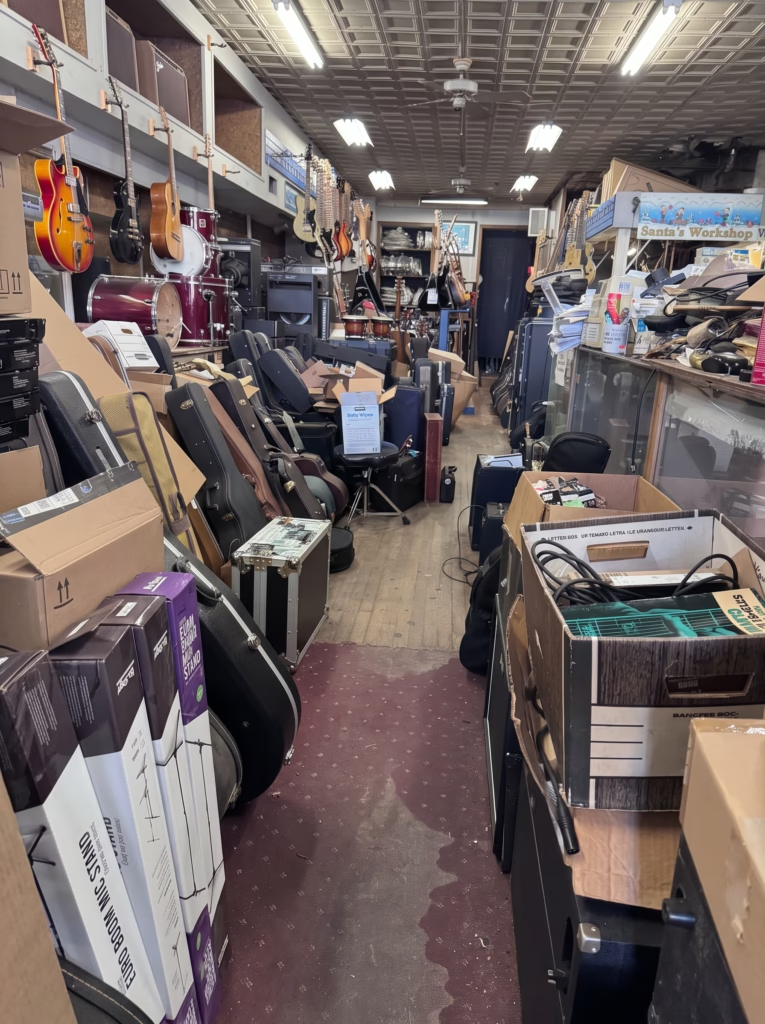
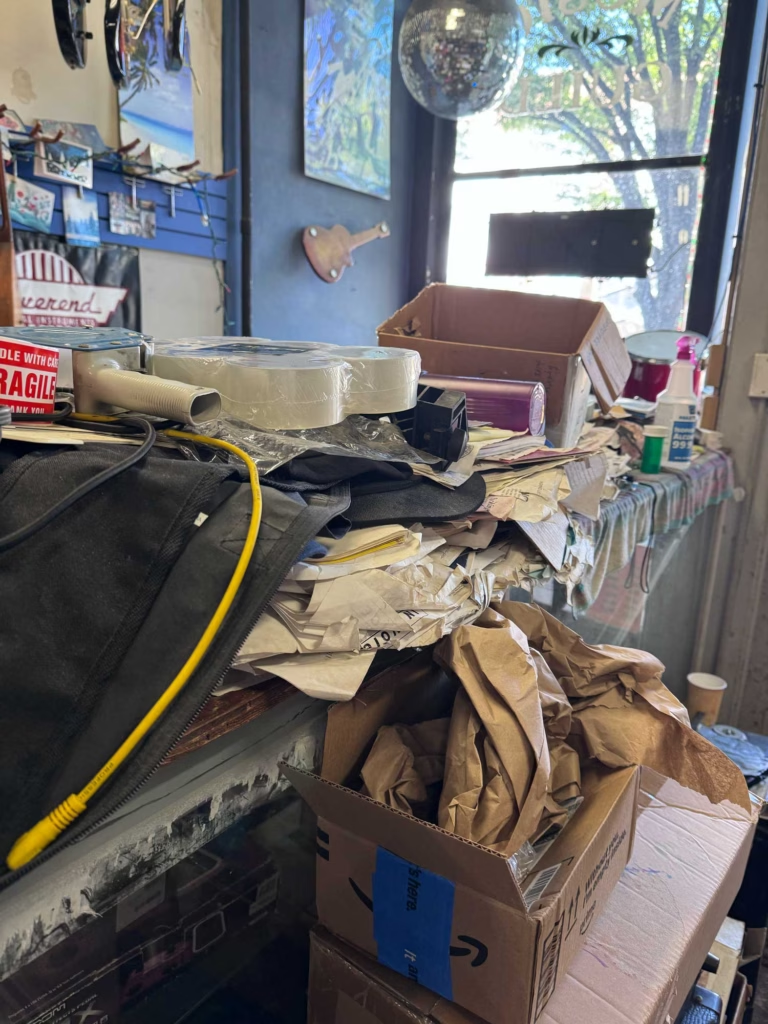
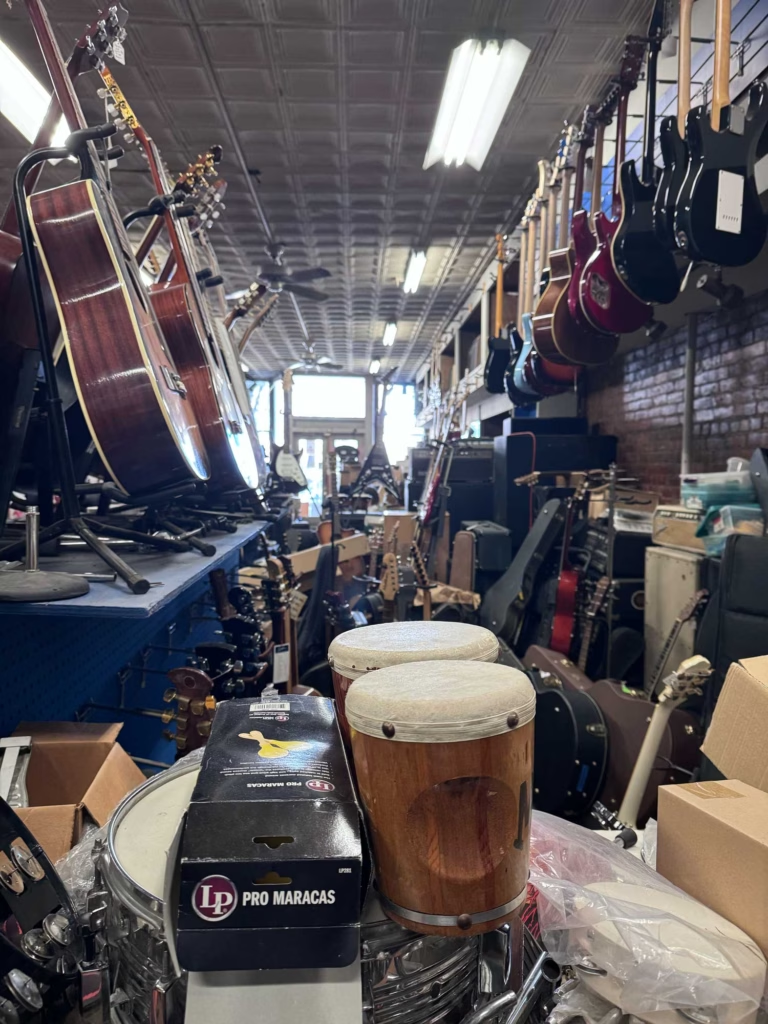
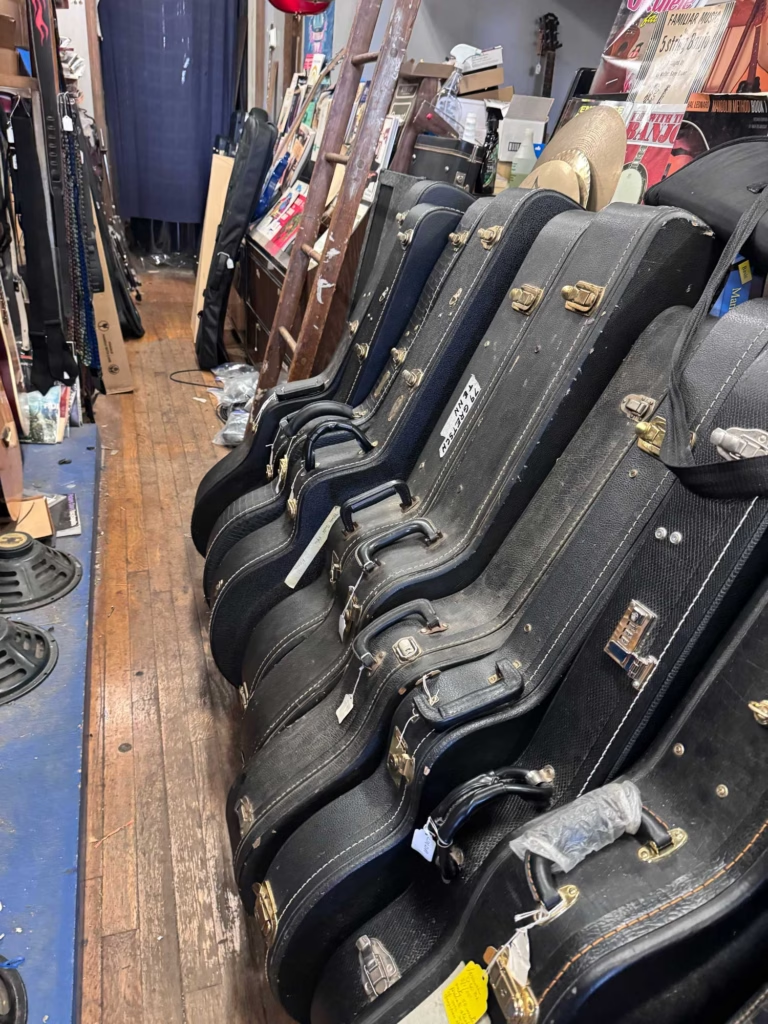
From the sidewalk it looks like a storefront that time forgot in the best way. A wooden green door sits square in the middle of an old red brick building, with windows trimmed in that same green paint on either side, “Music Guild” painted right across the glass in gold script like it’s been there since the day the doors opened. Drum kits sit stacked behind the windows. Inside, it’s something closer to a museum that’s still breathing. Guitars hang from the ceiling in rows, dozens of them, Fender, Gibson, Vox, and things I couldn’t name, all lined up like a choir. Beneath them: cases stacked on cases, amps stacked on amps, drawers of parts, boxes of paper going back who knows how many decades, a disco ball hanging over a workbench buried in receipts and packing tape. It is, without question, a mess. It is also, without question, one of the most honest shops I’ve ever stood in.
The History Behind The Music Guild on Main Street
I later learned The Music Guild opened in 1967. That’s not a typo. Owner Russ Mumma had been a working guitarist, he played with a band called the Ramrods before he decided Danbury needed a New York style guitar shop of its own. One modeled after the legendary Greenwich Village stores of that era. He owns the building located at 276 Main Street, which has kept him out of the rent wars that eventually killed most of the shops he was copying. He opened it to give fellow musicians a place to gather, and nearly sixty years later, that’s still exactly what it is.
Over the decades, some genuinely legendary players have wandered through that door, from Gregg Allman to Derek Trucks to Steve Van Zandt. But that’s not really the story. The story is that none of it changed the place, or the man who runs it.
Meeting the Man Behind the Shop
I’m fairly sure the older gentleman who greeted me was Russ Mumma himself. Right as I walked in, he asked if I was a player. I told him I do my best. He nodded, smiled, and told me to look around, that every one of those cases stacked around the shop had a guitar inside, and I should open them up and take a look. Then he thanked me for coming by, like I was doing him the favor.
I told him then that I do this in every city I visit for work, that I hunt down shops like his between meetings because it’s the only part of the trip that feels like mine. He didn’t act surprised. I got the sense he’d heard some version of that story a thousand times, from a thousand guys just like me, and maybe some much more famous, but he still meant it every time he said come on in.
Not long after, he wandered into the back room. That’s where I heard him again, tuning up a banjo with someone else, running through some James Taylor songs. Not performing them. Just playing, the way you play something when you’re not thinking about anyone listening. I never crossed paths with him again after that. I dug through cases for a while longer and let myself out.
Clutter or Stewardship
Here’s the thing about a place like The Music Guild. To someone walking past the window, it might look like clutter, like junk that never got thrown out. But spend ten minutes inside and you realize you’re not looking at hoarding. You’re looking at stewardship. Every guitar hanging from that ceiling, every stack of yellowed paperwork, every amp wedged into a corner, somebody decided that thing was worth keeping. Somebody decided it still had a song left in it. That’s not clutter. That’s care, stacked twelve feet high, for almost sixty years.
What This Shop Has to Do With “11 Days”
I think about “11 Days” a lot when I think about shops like this. The whole record started as an eleven day sprint and turned into a three year excavation of songs I’d half finished, half forgotten, and half written off. Some of those songs sat for over twenty years before I picked them back up. In a lot of ways, my hard drive is a smaller, quieter version of that shop on Main Street. A pile that looks like a mess to anyone else but is actually a record of everything I refused to throw away.
The Three Days I Didn’t Get
What I really wanted was to spend three days in that store. Three uninterrupted days going through every case, every box, every piece of paper, and the undivided attention of the guys who run it. I wanted to sit in the back with them and talk for days on end about guitars, guitar players, whoever the greatest picker who ever lived was, and lose. I wanted to hear the story behind every guitar on that wall. Instead I got forty five minutes between meetings, a banjo version of a James Taylor song drifting out from a back room, and a reminder of why I keep doing this.
Why Shops Like This Still Matter
Places like The Music Guild aren’t really in the business of selling guitars. They’re in the business of proving that the stuff you loved when you were twenty doesn’t have to be gone just because you’re not twenty anymore. Russ Mumma has been proving that on Main Street in Danbury since 1967. I hope he’s still proving it for another sixty years.
If you’re ever in Danbury, CT with an afternoon and no plan, go find it. It sits on Main Street almost at the corner of Main and Elm. Just don’t expect to leave with your schedule intact.