A conversation with Greg Joseph and Kevin McDonald from The Clarks and Grapevine
Let me be upfront about something before this blog goes any further. Down on Jane was probably one of Pittsburgh’s least successful bands. We had a short run in the late ’90s and early 2000s, played some shows, made some music, and then life pulled us apart. Dan, our bass player, got sick. Matt had kids. I got married and then had kids of my own. Scott moved to New York City, and eventually, Dan did too, once he recovered. By 2003 or 2004, it was over, not with a bang but with the quiet drift of people moving on to the next chapter.
We were never close to the success of The Clarks or Grapevine. Not even in the same conversation. But we were there, part of the scene in a small way, and we were paying attention to every band above us on that bill. This blog is not the story of Down on Jane’s place in Pittsburgh music history, but a thank-you letter to the bands that built the scene we got to be part of, and to the bands of today carrying it forward and making it stronger than ever.
Every music scene has its own unspoken hierarchy. Not mean-spirited, not gatekept. Just the natural order of things. There are the bands that have put in the time, built the following, and earned the headline slots. And then there are the bands still working their way up, watching from the wings, taking notes.
When Down on Jane was coming up in Pittsburgh, The Clarks and Grapevine were the seniors. We were the juniors. And like any junior worth their salt, we were paying close attention.
Greg Joseph
Greg Joseph is the bassist and a founding member of The Clarks, one of the most enduring bands Pittsburgh has ever produced. But his fingerprints on this city go well beyond the stage. He served nine years on the board of directors at WYEP and has spent years as the executive producer of WYEP’s Reimagination Project, a music education program that pairs high school musicians with professional producers and real studio time. (WYEP / NEXTpittsburgh) Greg has dedicated a significant part of his life to ensuring the next generation of Pittsburgh musicians has the resources and mentorship his generation never had. He is, in every sense of the word, a builder.
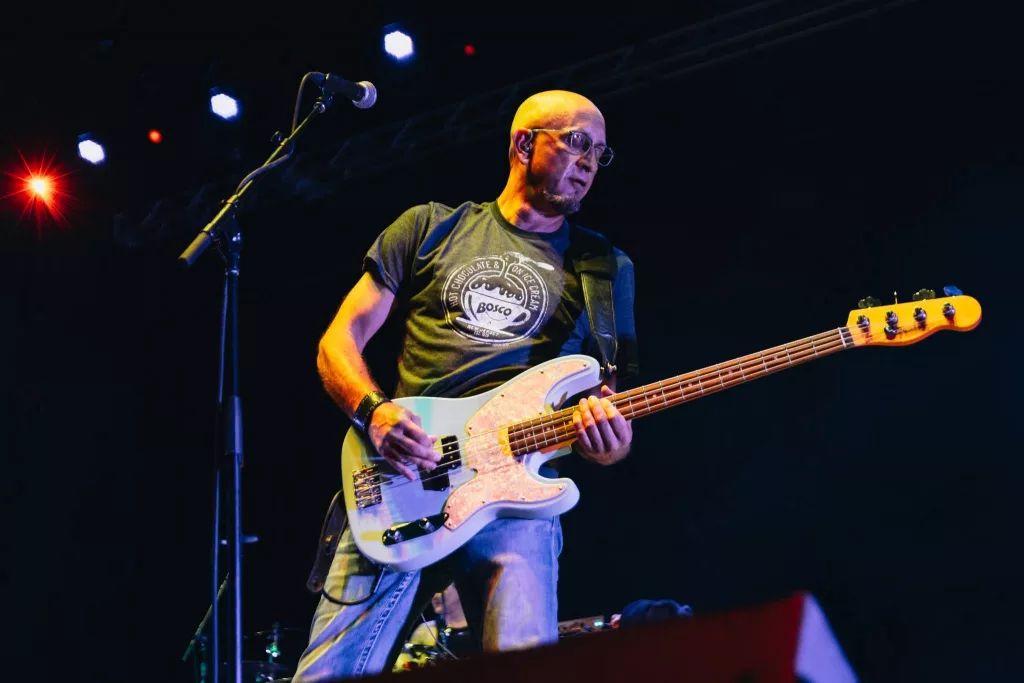
Kevin McDonald
Kevin McDonald is the kind of musician who never stops. He was the guitarist and co-founder of Grapevine, but his musical life stretches in every direction. He plays guitar with Jim Donovan and the Sun King Warriors, handles guitar and vocals in the acoustic trio Tres Lads, and has been part of earlier projects like Raquel.
He’s also the owner of Main Street Music in Irwin, carrying on a strong local music-retail tradition that shaped this whole scene. Kevin got his start working at Swissvale Music, the same shop where Scott Spear, Down on Jane’s guitarist, bought his first guitar, a Telecaster he still plays to this day, along with his Peavey Delta Blues 210 amp. It’s also where I bought my first guitar and first bass. We go back a long way with Kevin. That store, like most of the local Pittsburgh music shops, was and still is a thread that ran through a lot of us.
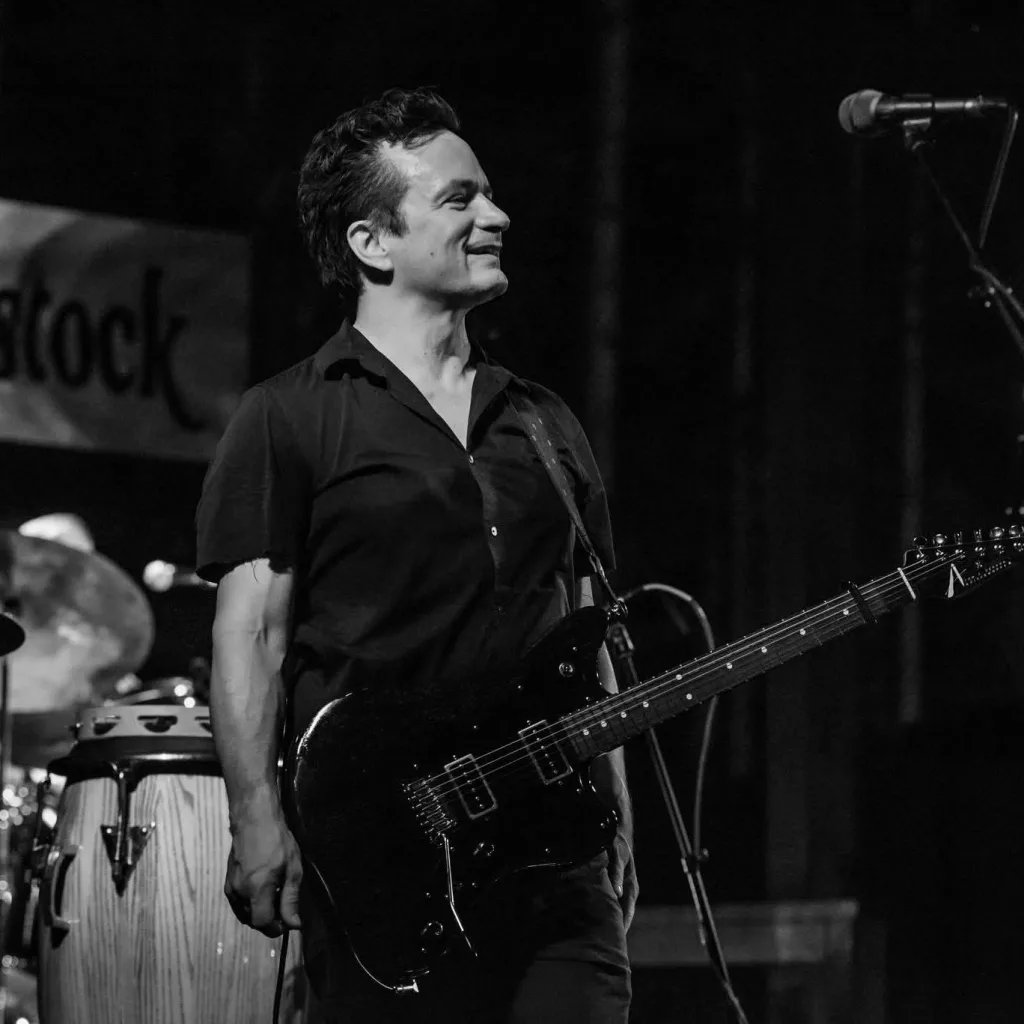
What strikes you immediately when you sit down with both is how genuinely kind and humble they are. These are guys who could trade on their legacy and coast. Instead, they’re still building, still mentoring, still showing up. Crown jewels of the Pittsburgh music scene, then and now.
Looking Up at the Top of the Bill
The late ’90s and early 2000s in Pittsburgh were something electric. There was a real moment, and Kevin and Greg both remember it clearly, when the city had a genuine buzz. Local bands were landing national attention. The stages at Graffiti and Nick’s Fat City were launching pads, not just local rooms. DVE and The X were spinning Pittsburgh bands as if they belonged next to any national act.
The Clarks and Grapevine stood at the top of that bill. They weren’t just successful. They were the proof of concept, and they showed every band coming up behind them that it was possible to build something real right here, without leaving, and without concession.
And to put that in perspective: while Greg was headlining Nick’s Fat City on Carson Street and Kevin was playing some of Grapevine’s earliest shows around 1996, Scott, Jeff, Dan and I were across town at a coffee shop in Regent Square called Katerbean, a place that didn’t even host bands, struggling through a set on a PA system that should have been retired years earlier.
We were called The Epimeres. Jeff, our original singer, had a harmonica. Scott was on guitar, and Dan and I swapped guitar and bass. The mixer was held together with masking tape. There was no drummer. Tom wasn’t part of the band yet, and Matt and I were a few years away from meeting. That night was the beginning of something, though you’d have had a hard time convincing anyone in that room of it. Greg and Kevin had a good ten years on us, too. They weren’t just further along in the scene. They’d been at it longer than we’d even known what a gig was.
1980’s-1990’s
To understand what that era meant, you have to understand that the Pittsburgh music scene didn’t always live on the South Side. For Greg and The Clarks, the scene was Oakland. The Decade was their room, and part of their regular circuit. Sadly, it closed in 1995, and I was graduating from high school that year. The mid-to-late ’80s through the late ’90s were a wild stretch for Pittsburgh music, and Greg was right in the middle of it.
Nick’s Fat City on Carson Street opened in 1992, but it took time to earn its place. (WESA) Greg mentioned that in the early days, the South Side hadn’t yet become the home of the Pittsburgh music scene. For a band like The Clarks, whose world was Oakland, Nick’s was the new kid. It hadn’t proven itself. They were slow to embrace it, and honestly, why wouldn’t they be? They already had their circuit.
1995-2000
By the time Grapevine formed around 1995, the South Side had become a destination. Greg remembered it fondly, a cool neighborhood coming up with its own energy, but framed it the way only someone who truly understands Pittsburgh would. It was another neighborhood to play in. That’s the thing about Pittsburgh. It was never just a city. It was always a collection of neighborhoods, each with its own identity, bars, crowd, and version of the scene. Oakland was one neighborhood. The South Side was another. For The Clarks, adding Nick’s Fat City to the circuit meant adding another neighborhood to the map. For Grapevine, the South Side was home base from the start.
And then there was us. For Down on Jane, Nick’s Fat City was the goal. Getting booked there meant you had made it into the Pittsburgh scene. We played there. We earned that. But looking back, Nick’s was never our peak. It was a milestone.
In our conversation, Kevin talked about cold-calling larger bands to get Grapevine on their bills as an opener. That was the hustle. That was how you moved up. As a younger band, Down on Jane would have been honored just to open for an opener for Grapevine or The Clarks. We didn’t know how to ask for it. We didn’t know you could just pick up the phone. That’s the difference between the seniors and the juniors. It’s knowing how the game works and how to play it.
Early 2000’s
Our actual peak came not from a cold call but from a miracle of timing. September 22, 2003, at Rosebud in Pittsburgh’s Strip District. Another neighborhood, another room, and the biggest stage we ever stood on. By some miracle, we landed the opening slot for My Morning Jacket, fresh off the release of It Still Moves and already generating serious national buzz, alongside The Sleepy Jackson, a genre-defying band from Australia. We loaded in like we always did, duct-taped cases, mismatched cables, torn tolex on amps. Matt looked out over a packed room and said it simply into the mic: “We’re Down on Jane. We’re from here. We’re from Pittsburgh.” That was it. No band bio. No pitch. Just five guys from Pittsburgh holding their own on a stage that felt bigger than anything we’d ever stood on.
None of us knew it was the last time we’d stand on a stage together as a band. Life would move on, and Rosebud would close shortly after that night, one more Pittsburgh room that existed just long enough to matter. You can read that whole story here.
The dream and the peak don’t always happen in the same room. That’s something else Pittsburgh taught us.
What It Actually Looked Like From the Inside
Here’s the thing about looking up at someone from the bottom of the bill: you see the highlight reel. You see the packed rooms, the radio spins, and the name on the poster above yours. You don’t see the grind.
Sitting down with Kevin and Greg, I finally got to hear the grind.
The Carks
Greg talked about how The Clarks even came to exist. Before the band, Greg and Rob James had met at IUP and played together in a group called Ulterior Motive. They found each other through a mutual high school friend, and the drummer in that band was in Scott Blasey’s fraternity, which is where they practiced.
Greg graduated and came back to Pittsburgh to work. Rob James stayed and met Scott Blasey through the fraternity, and they formed a cover band called The Administration. Dave Minarik was on drums, there was another guy playing bass, and a kid who played sax. They played for about a year, and then the sax player and the bass player left IUP. It was down to just Scott, Rob, and Dave.
Rob was in Pittsburgh and paid Greg a visit at work one day. He told Greg that Scott, Dave, and he were looking for a bass player. Greg chuckled and said it was like the Blues Brothers getting the band back together. Four fried chickens and a Coke. And some dry white toast. Greg said yes, and that was that. (Wikipedia — Scott Blasey)
Grapevine
Grapevine’s story had its own version of that beginning, though it came together just as naturally. Kevin, his brother Sean McDonald, and Don Kragel had been in a band that was winding down. Music was changing, and so were they. They had always wanted to work with Jean-Marc Azoury, whose other projects they had admired. Kevin had also played in a band with Kenny Pardiny about five or six years prior to Grapevine. Kevin mentioned that he had always loved his playing and singing, so bringing him in on bass felt right. The timing lined up, and they started getting together to write and jam.
That original lineup of Kevin on lead guitar, Jean-Marc on vocals and guitar, Kenny on bass, Don on guitar, and Sean on drums would become Grapevine. Sean eventually stepped back to focus on his recording studio, Red Medicine in Swissvale, and Don left over creative differences. Chris Jamison came in on drums, and Grapevine settled into the four-piece that would define their run.
Grapevine split up briefly around 2001, after getting close to several record deals. Kevin describes it simply: a little burnout, a little frustration, the way it goes when you’ve been pushing hard and the finish line keeps moving. They put the band back together the following year with a new bass player and released more music, but as the scene shifted and life moved on, it was time. They still play occasional reunion shows at Stage AE for the Nick’s Fat City charity events, which says something about what the band and that era still mean to the people who were part of it.
The Grind Was Real
The origin stories were different, but what it took to build something in Pittsburgh looked the same for everyone.
The story of The Clarks’ first album arriving warped in the summer heat and selling the damaged copies anyway. The careful negotiations with the booking agent at Nick’s Fat City just to get paid fairly. The way places like Swissvale Music and National Record Mart weren’t just stores but genuine pillars of the scene, places where Rob James, guitarist for The Clarks himself, worked the floor at NRM and kept the band plugged into what was new and what was coming next. The community was real. The hustle was real. And the bands took care of each other.
Pittsburgh Radio
Pittsburgh had two stations that defined rock radio in that era, and together they covered the full spectrum. WDVE 102.5 was the classic rock institution, a Pittsburgh staple that had been part of the city’s DNA for decades. Getting spun on DVE meant something permanent. It meant you were part of the fabric of the city. The X at 105.9 arrived during the grunge era as Pittsburgh’s alternative rock station, younger and hungrier, perfectly timed for bands like The Clarks and Grapevine who were making exactly the kind of music that format was built for. The lines between the two weren’t always hard; classic rock and alternative had plenty of overlap in that era, and between them, Pittsburgh-based bands had two legitimate paths to Pittsburgh’s ears.
Scott Paulsen and Jim Krenn
No conversation about WDVE and Pittsburgh music would be complete without talking about the people behind the mic who made it all possible. Long before anyone was talking about the Pittsburgh scene in national terms, Scott Paulsen and Jim Krenn were championing local music on DVE. (Wikipedia — The DVE Morning Show) On Fridays, they hosted the DVE Coffeehouse, where local acts came to the WDVE studios to play live on the air. For a Pittsburgh band in the ’90s, getting on that show wasn’t just good exposure. It was a stamp of legitimacy from the station that defined rock radio in this city.
Randy Baumann
When Randy Baumann came along, he carried that torch and ran with it. The host of the DVE Morning Show on WDVE 102.5 FM has been one of the most passionate advocates for the Pittsburgh music scene it has ever had. In 2014, Randy and Clarks’ guitarist Rob James launched a series of Rambles at Lawrenceville’s Thunderbird Cafe, inspired by Levon Helm’s legendary Midnight Rambles, bringing together a cross-generational gathering of Pittsburgh bands, including The Clarks. (TribLive) After a hiatus during COVID, the Rambles returned, with Randy inviting fellow Pittsburgh musicians to share the stage with him. An accomplished musician himself, a guitarist and keyboard player, he released his first album in over twenty years in 2024, titled Wanderin’ Fool, featuring an all-star cast of Pittsburgh musicians. (Pittsburgh City Paper)
In a feature for NEXTpittsburgh, Randy put it this way: “I’m here to tell you that Pittsburgh has carved out a niche not unlike what Austin carved out in the early ’80s, or the genesis of a town like Athens.” (NEXTpittsburgh) His goal is to shine a light on bands that can make a real connection with people, in the tradition of Pittsburgh legends like The Clarks, Donnie Iris, and Joe Grushecky. For bands like The Clarks and Grapevine, DVE wasn’t just a radio station. It was a lifeline.
What the Seniors Know That the Juniors Don’t
The conversation took a turn I didn’t expect, away from the past and toward right now.
These are guys who’ve been making music for decades. They’ve watched the industry transform completely underneath them, and both Grapevine and The Clarks felt it firsthand.
Greg talked about the impact of MCA’s merger with BMG and how the fallout led to the band being released from their label. One day you’re signed, the next the rug is pulled out through no fault of your own. Just the cold mechanics of corporate consolidation. And somewhere in all of that, something shifted.
The self-induced pressure of the earlier years, the urgency to be bigger, to break through, to matter on a national scale, has given way to something quieter and honestly more sustainable. Greg talked about the importance of compromise, of not inflating everything into something larger than it needs to be. Kevin talked about the joy of collaboration, of writing with people he loves, of playing with Sun King Warriors and Tres Lads, each project feeding something different in him.
That’s the thing the juniors don’t have yet. The perspective to know that the music itself is the point. Not the trajectory, not the deal, not the placement. Doesn’t matter covers or originals. It’s just the music, and the people you make it with.
Hearing that from two guys who were benchmarks when we were coming up felt like something worth holding onto. Down on Jane never got close to what The Clarks and Grapevine built. But we were there, in that scene, breathing the same air, playing the same rooms, listening to the same radio stations.
What Comes Full Circle
Pittsburgh gave us something we didn’t fully appreciate until much later. It gave us a scene with real bands, real venues, real radio stations that actually cared, and people like Greg and Kevin who treated the whole thing like it mattered because it genuinely did. The groundwork they laid, the shows they played, the audiences they built, all of it made space for every band that came after them, including one very small, very short-lived band that got to open for My Morning Jacket in Pittsburgh’s Strip District.
We went out swinging. And we were lucky enough to do it in Pittsburgh.
Sitting across from Kevin and Greg, I wasn’t thinking about what we never achieved. I was thinking about how fortunate we were to have been in the same city, at the same time, as people like them. People who built something real, who gave back more than they took, and who are still at it today.
That’s the thing about Pittsburgh. It takes care of its own. These two guys are proof of that.
Pittsburgh Music Today
The rooms have changed, but the spirit hasn’t. Graffiti closed in 2000, and Nick’s Fat City is long gone. Rosebud, like so many other venues, is gone too, but Pittsburgh has never stopped making music or making room for new bands to find their footing.
Today, the intimate venues that carry that tradition forward include Mr. Smalls in Millvale, Thunderbird Music Hall in Lawrenceville, Spirit, the Roxian Theatre in McKees Rocks, and the Original Pittsburgh Winery and City Winery, sitting less than a mile apart in the Strip District. Oakland, the neighborhood that gave The Clarks their circuit, came close to getting live music back with Haven, which briefly opened in January 2025 in a former Greek Orthodox church on Atwood Street as Oakland’s first permanent performance space in over twenty years. It welcomed over 4,500 attendees and hosted more than fifty concerts before a city permitting dispute forced it to suspend events in February 2026. Oakland deserves its room back.
WYEP continues to run its Neighborhood Concert Series, bringing free live music to communities across the city and pairing Pittsburgh bands with up-and-coming national artists. The Millvale Music Festival, a free two-day event featuring hundreds of bands at venues throughout the borough, has been recognized as one of Pittsburgh’s best music festivals. The Four Chord Music Festival returns to the city each fall. The Three Rivers Arts Festival fills the Cultural District every summer.
Still Showing Up
And through all of it, the same thread runs. The Clarks still play regularly throughout the region. Greg still builds, still mentoring the next generation through WYEP’s Reimagination Project, still showing up for Pittsburgh music in ways that go well beyond the stage. Kevin is nothing short of a machine. He plays out almost every night with Tres Lads or Jim Donovan and the Sun King Warriors, and he’s back behind the counter at Main Street Music the next morning. He is one of the hardest-working musicians in Pittsburgh, and he does it all with the same quiet generosity he’s always had. Whether someone needs help with gear, has a question about the business of music, or asks him to sit down for a silly blog about the Pittsburgh scene in a different era, Kevin always has time.
The city has always had the talent. It has always had the community. What Greg and Kevin and the bands of that era gave every musician who came after them goes beyond music. They gave us a blueprint for how to build something real, how to support the people around you, and how to keep showing up. The bands carrying that torch today, filling the rooms, building followings, and keeping live music alive and thriving in Pittsburgh are proof that it worked. That’s the greatest thing a senior can give a junior. Not a shortcut. Just the example.